


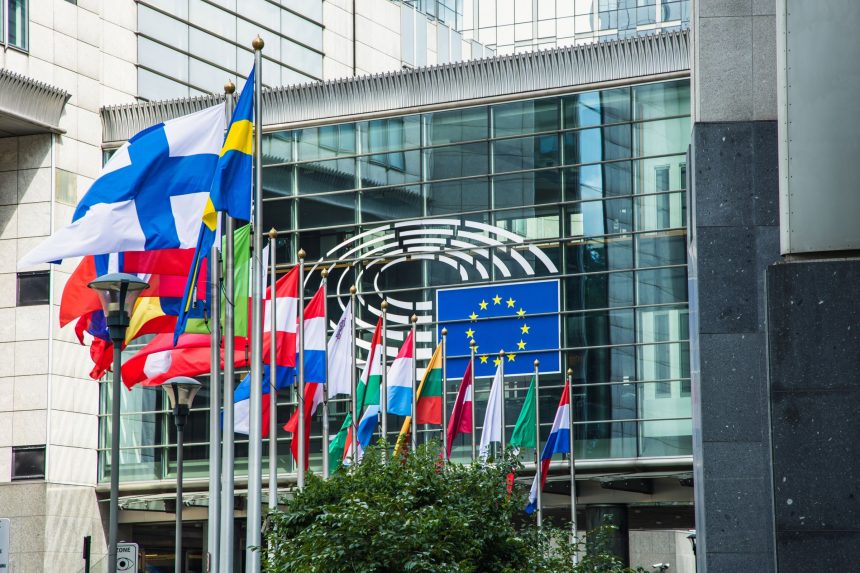

The EU-Iran war diplomacy effort sharpened on March 17 as European Union foreign policy chief Kaja Kallas urged the United States and Israel to end the war with Iran. She said stopping the conflict would serve everyone’s interests. She also said the EU is consulting governments across the Middle East on ways to help end the fighting.
Kallas said the European role is most likely diplomatic, not military. She left open the possibility of European participation in restoring navigation through the Strait of Hormuz, but said any involvement would most likely come through a broader diplomatic settlement. Her comments underline Europe’s reluctance to enter a war it says it did not start.
The stakes are already global. The war has pushed up energy prices and disrupted one of the world’s most important trade chokepoints. For Europe, the immediate concern is economic fallout. For policymakers, the bigger concern is that a regional conflict could spiral into a wider crisis.
Kallas Calls for a Negotiated Exit
Kallas said the war should end as soon as possible. She warned that wars are easier to start than to stop. She also said they tend to get out of hand. That message reflects growing European concern that the conflict could widen beyond its current fronts.
She said the EU is ready to help diplomatically bring the parties together. According to her remarks, Brussels has been consulting with the Gulf states, Jordan, and Egypt. The purpose is to explore whether a face-saving path exists for Iran, Israel, and the U.S. to step back from escalation. She did not provide details on any specific proposal.
Kallas also made clear that many Europeans opposed the war from the start. She said European governments were not consulted before it began. She added that many had tried to dissuade Washington and Jerusalem from launching it. That complaint points to a deeper transatlantic strain over strategy and process.
Europe Rejects Military Role in Hormuz
The EU-Iran war diplomacy push also reflects hard limits on Europe’s military appetite. Several European governments have already rejected President Donald Trump’s calls to join a mission to reopen the Strait of Hormuz. Leaders have said they are unwilling to place forces in direct danger in a war they did not initiate.
Kallas echoed that caution directly. She said “nobody is ready” to put their people in harm’s way in the Strait. Instead, she argued for diplomatic ways to keep the corridor open. Her warning was blunt: failure to do so could trigger food, fertilizer, and energy crises worldwide.
That stance matters because Hormuz is central to global energy shipping. Disruption there has already lifted prices and increased pressure on import-dependent economies. Europe may not want a combat role, but it cannot avoid the economic consequences of a prolonged blockade.
Black Sea Model Emerges as One Option
Kallas floated one possible model for de-escalation around the strait. She pointed to the UN-brokered Black Sea grain deal, which allowed Ukrainian exports to move during wartime without civilian vessels being attacked. Her suggestion is that a similar arrangement could help restore passage in Hormuz without forcing foreign militaries into direct confrontation.
She said she had discussed the idea with U.N. Secretary-General António Guterres. She also said the United Nations is working on it. The unresolved question, she said, is what neighboring countries, especially Iran, would accept. That leaves the proposal at an exploratory stage rather than an active framework.
Still, the comparison is significant. It suggests Europe is trying to build a limited mechanism around shipping security rather than a broader political settlement first. That may be more realistic in the short term. It could also provide a way for all sides to reduce risk without appearing to retreat outright.
Transatlantic Friction Shapes the Response
Kallas also said Europe does not understand some U.S. actions under Trump or Washington’s objectives in Iran. At the same time, she said Europe has become more accustomed to Trump’s unpredictability and is now “calmer” in response. That language suggests both frustration and adaptation.
The war is only the latest source of strain in EU-U.S. relations since Trump returned to office. Europe is now balancing three pressures at once: preserving the alliance, avoiding direct military entanglement, and limiting economic damage from the conflict. Those goals do not always align neatly.
For markets, the immediate issue is clear. Any credible diplomatic opening could ease pressure on energy prices and shipping routes. A failed effort would deepen concerns about prolonged disruption. The EU-Iran war diplomacy push is therefore not only a geopolitical initiative. It is also a test of whether Europe can shape events without entering the war itself.