


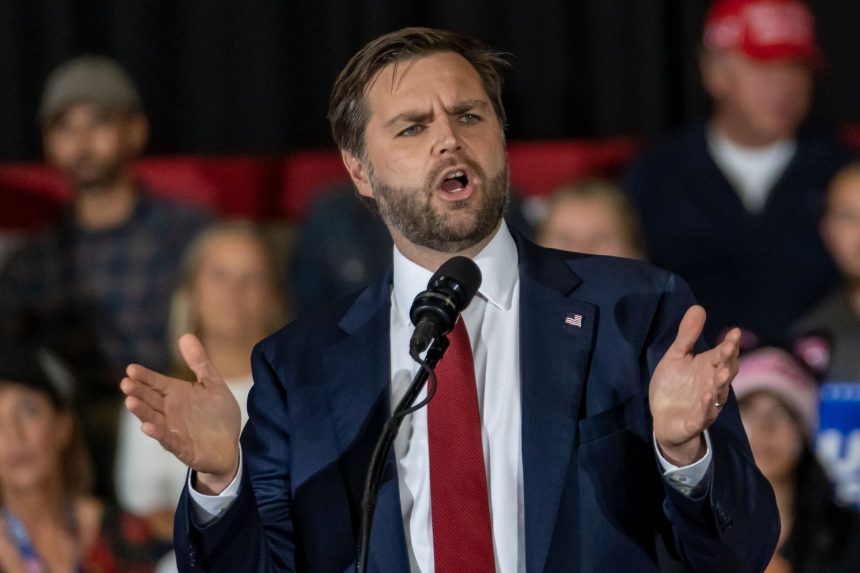

The Vance Iran war comments drew attention on April 7 after Vice President JD Vance distanced himself from President Donald Trump’s more absolute rhetoric about divine support in the war with Iran. Speaking in Budapest, Vance said Americans should pray that they are on God’s side, rather than assume God is automatically on theirs. His wording signaled a more restrained moral stance at a time of rising pressure on the administration’s Iran policy.
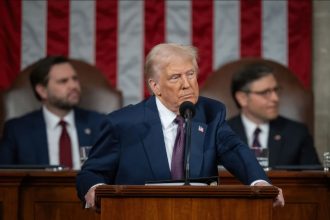
The contrast mattered because Trump had taken a much sharper line. He said God was on the side of the United States in its war with Iran, even as the conflict widened and casualties mounted. Vance did not break with the administration’s strategic goals. But he framed the war in more cautious and ethically burdened terms.
That tone fits Vance’s political identity. He is a Catholic convert, an Iraq War veteran, and a longtime skeptic of prolonged U.S. military intervention abroad. Yet he is now defending an administration fighting a major war in the Middle East. That tension has made his public statements especially closely watched.
A More Measured Response to Trump’s Language
At the Budapest press conference, Vance was asked about Trump’s assertion that God supported the U.S. role in the war. He answered with a more cautious phrase, saying people should pray that they are on God’s side. The formulation suggested humility rather than certainty. It also set him apart from the president without openly contradicting him.
Vance still defended the administration’s central argument. He said the United States believes it is acting to stop Iran, a regime Washington accuses of supporting terrorism, from obtaining nuclear weapons. In that sense, his remarks did not represent a policy split. They reflected a difference in tone and moral framing.
The distinction is politically important. Trump has increasingly used apocalyptic language in describing the stakes of the conflict. Vance, by contrast, has sounded more like a reluctant steward of a war he did not originally champion. That difference may matter if the conflict drags on.
Vance Balances Loyalty With Skepticism
The Vance Iran war comments come as the vice president walks a difficult line inside the administration. Reuters reported earlier this month that Vance had spoken with intermediaries from Pakistan as part of diplomacy tied to the conflict. He has therefore played both a public and behind-the-scenes role. That has made him a central figure in the administration’s effort to combine pressure with negotiations.
At the same time, Vance has not become a full-throated war hawk. A previous Washington Post report noted that he had avoided direct criticism of the war even as U.S. casualties rose and officials gave conflicting explanations for American strategy. That ambiguity reflects his bind. He must back Trump while remaining credible to voters who once saw him as a critic of open-ended intervention.
That tension was visible again on April 7. Reuters reported that the United States had struck military targets on Kharg Island, but Vance stressed that the operation did not represent a change in strategy. He said the administration was still focused on forcing a formal Iranian response on nuclear issues and the reopening of the Strait of Hormuz.
War Pressure Is Colliding With Moral Language
The broader context makes the moral framing more charged. The war has already killed thousands across the Middle East, and at least 13 American service members have died, according to the Washington Post summary. Trump has paired that reality with language suggesting divine support and civilizational stakes. Critics argue that such rhetoric risks sanctifying a conflict with immense human costs.
That criticism has also come from religious voices. Pope Leo XIV has called for peace and condemned the perpetuation of war. His interventions have added to scrutiny of politicians who invoke God while escalating military operations. In that atmosphere, Vance’s more restrained phrasing may have been an attempt to acknowledge the gravity of war without claiming sacred certainty.
The issue is not merely rhetorical. Moral language can shape public tolerance for conflict and frame how casualties are understood. Saying God is on one side suggests righteousness is settled. Saying one should pray to be on God’s side suggests uncertainty, accountability, and the possibility of error. Vance’s wording therefore carried deeper implications than a simple religious aside.
A Political Test for Vance’s Future
The Vance Iran war comments also matter because of his political future. He is widely seen as a potential 2028 presidential contender. How he handles the Iran war may shape whether he is viewed as a loyal heir to Trump or as a more restrained nationalist in his own right. Reuters noted that he has remained involved in diplomacy even while defending military pressure. That dual role could help him if the conflict ends quickly. It could also hurt him if it deepens.
For now, Vance appears to be offering a careful balancing act. He is supporting the administration’s objectives while avoiding the most absolute moral claims. In a war defined by escalation, ultimatums, and religious symbolism, that caution stood out. Whether it proves politically durable may depend less on words than on what happens next in Iran.