



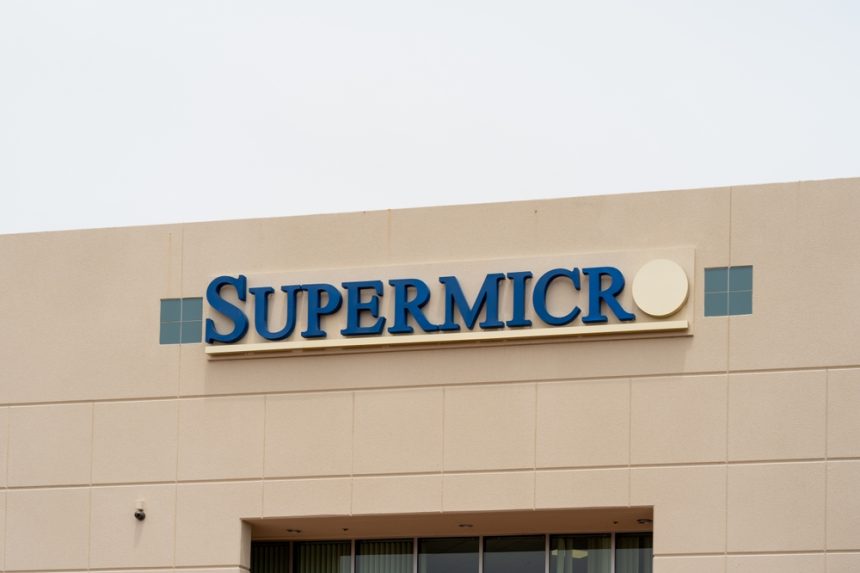

Super Micro has launched an independent investigation after three people linked to the company were indicted on charges tied to alleged export-control violations, pushing the server maker into a new period of legal and compliance scrutiny. The company said it has also begun an internal review of its global trade compliance program, signaling that the issue is being treated as more than an isolated personnel matter.
The case matters because Super Micro sits at the center of one of the most strategically sensitive parts of the technology market: high-performance servers used in artificial intelligence workloads. Any suggestion that restricted hardware may have been diverted through indirect channels raises immediate questions not only about company oversight, but also about how effectively U.S. export controls are being enforced in the broader AI supply chain.
For now, Super Micro itself has not been charged. Even so, the allegations are serious enough to trigger an internal response involving outside legal and forensic support, showing that the company understands the potential reputational and operational damage that could follow if weaknesses in compliance controls are exposed.
Three people tied to the company were indicted
The Justice Department charged co-founder Yih-Shyan Liaw, sales manager Ruei-Tsang Chang and contractor Ting-Wei Sun in connection with an alleged scheme to move U.S.-made servers through Taiwan and into Southeast Asia. According to the allegations, the products were then repackaged into unmarked boxes before being smuggled into China.
The scale described in the case is striking. Prosecutors say the three individuals moved at least $2.5 billion in U.S. artificial intelligence technology, including more than $500 million worth of shipments during a short period between April and mid-May of last year. Those figures alone make the case significant, even before any court ruling on the merits of the allegations.
Super Micro has tried to distance itself from the individuals involved. The company said it placed Liaw and Chang on leave and terminated Sun after becoming aware of the charges. Liaw also resigned from the board in March following the indictment.
The allegations deepen concerns over AI export controls
The case lands at a time when the movement of advanced AI hardware has become one of the most closely watched issues in global technology policy. Restrictions on high-end chips and related systems are meant to stop sensitive computing capability from reaching entities in China that may be subject to U.S. controls, particularly where military links are involved.
That is why the mention of end buyers adds another layer of seriousness. The source material notes that four Chinese universities, including two connected to the People’s Liberation Army, purchased Super Micro servers containing restricted AI chips over the past year. More broadly, universities and research institutes in China have previously acquired controlled chips inside servers made by Super Micro and other manufacturers.
This does not by itself prove corporate complicity, but it does reinforce a wider concern already present in Washington and across the semiconductor industry: that routing products through third countries can weaken the practical force of export restrictions if compliance systems are not strong enough.
Super Micro is handing the review to independent directors
In response, Super Micro said the investigation will be led by two independent board members, Lead Independent Director Scott Angel and Audit Committee Chair Tally Liu. Their findings will be reported to the board’s remaining independent directors rather than to executives directly involved in day-to-day operations.
The structure of that review is important because it is meant to show independence and credibility. The board has retained law firm Munger, Tolles & Olson to lead the investigation, while consulting firm AlixPartners has been brought in to provide forensic accounting expertise. That combination suggests the company is preparing for a detailed examination of documents, controls, approvals and transaction flows rather than a narrow internal fact check.
At this stage, however, the company has not given a timetable for when the investigation will be completed. That leaves investors, customers and regulators with uncertainty over how long the cloud over the business may remain in place.
The company now faces a credibility test
The biggest issue for Super Micro is no longer only the legal exposure of the three individuals named in the case. It is whether the company can convince the market that its compliance systems were robust enough, or if not, that they can be strengthened quickly enough to restore confidence. In industries tied to AI infrastructure and national security controls, governance weaknesses can become almost as damaging as direct legal findings.
That is especially true for a company whose products sit in a highly sensitive segment of the market. Super Micro has benefited from booming demand for AI servers, but that growth also means its controls are likely to receive more scrutiny than before. If the internal review uncovers gaps in oversight, the company may face pressure to make broad structural changes to how it manages exports, channel partners and international sales.
For now, the company remains in a waiting phase. It is investigating, it has brought in outside help and it has already taken action against the people named in the indictment. But until the independent review produces findings, Super Micro is left facing a difficult question that matters far beyond this one case: whether a major AI infrastructure supplier can prove its compliance systems are as strong as the geopolitical environment now requires.