





Direct-to-consumer brand taps Prime network
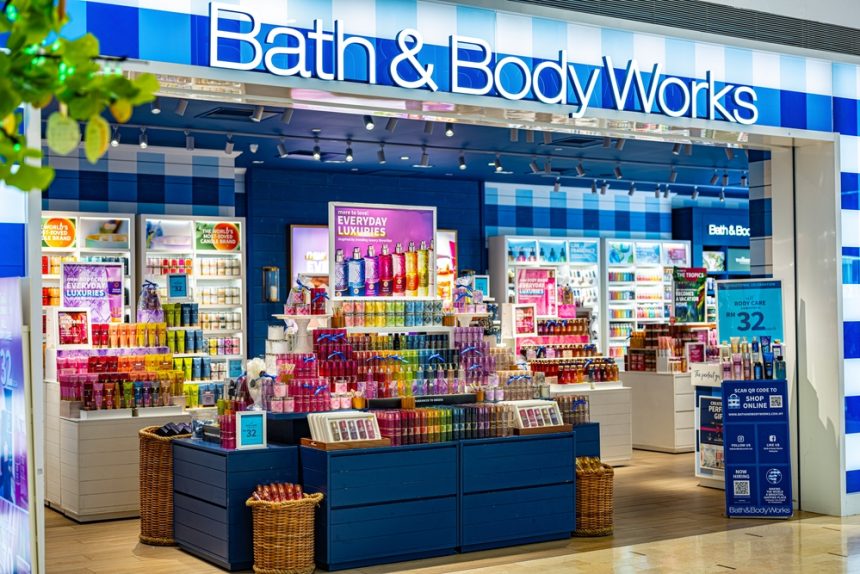
Bath & Body Works is widening its digital reach by opening an official storefront on Amazon, placing a curated assortment of its fragrances, soaps, body washes and candles directly in front of Prime members across the United States. The move provides fast shipping without a minimum purchase requirement for eligible items and marks a notable shift for the mall-based retailer, which historically concentrated sales within its own stores and website.
The decision positions the Columbus, Ohio company inside the country’s largest online beauty marketplace. According to Euromonitor, Amazon captured 47 percent of U.S. online beauty and personal care spending in 2024, far outpacing competitors such as Sephora, which held a 9 percent share. Overall, the research firm estimates that nearly four in ten beauty purchases now occur online, underscoring the importance of digital visibility for brands with national footprints.
Chief executive Daniel Heaf described the launch as an effort to place the brand where shoppers are already transacting. By establishing an authorized presence, Bath & Body Works aims to control how its products are presented and priced, while increasing convenience for consumers who default to Amazon for routine purchases.
Reclaiming control in a crowded marketplace
Prior to the official rollout, Bath & Body Works merchandise had appeared on Amazon through independent resellers. The absence of a company-managed storefront limited oversight of brand messaging and product assortment. Under the new arrangement, the retailer will maintain ownership of its inventory and set its own pricing, while relying on Amazon’s fulfillment infrastructure to ensure Prime eligibility.
Heaf acknowledged that matching Amazon’s shipping speed independently is unrealistic. Instead of attempting to replicate the scale of the Prime network, the company is leveraging it. The strategy allows Bath & Body Works to focus on merchandising and product development rather than building an expansive logistics operation.
The partnership also has implications for the company’s own ecommerce channel. Last month, it reduced the threshold for free shipping on its website from 100 dollars to 50 dollars, a signal that convenience and value are central to its competitive positioning. By balancing its direct platform with Amazon’s distribution capabilities, the retailer is attempting to strengthen its broader digital proposition.
Part of a wider growth reset
The Amazon expansion follows other efforts to diversify distribution. In the past year, Bath & Body Works began selling select products in more than 1,000 college campus stores, the first time its merchandise was offered widely outside its roughly 2,600 company-owned and franchised locations and its proprietary website. The goal has been to access new audiences and reinvigorate the brand among younger consumers.
Heaf, who joined the company in May after previously serving in a senior strategy role at Nike, has outlined a roadmap aimed at restoring consistent profitability. His framework centers on product innovation, brand renewal, competitive execution and operational discipline. The Amazon storefront represents an early milestone in that plan and signals a willingness to adapt to changing shopping behavior.
Industry observers note that Amazon relationships vary widely among retailers. Some brands operate through wholesale structures in which Amazon purchases inventory directly. Others maintain tighter control by retaining ownership and using the platform primarily as a logistics and marketing channel. Bath & Body Works has opted for the latter approach.
Amazon: logistics partner, not just retailer
The arrangement reflects a broader evolution in how vertically integrated brands engage with Amazon. Companies such as Gap, J. Crew and Everlane have tested limited assortments on the platform to reach incremental customers while preserving core brand strategies. In many cases, Amazon functions less as a traditional merchant and more as a high-performance distribution engine.
The competitive backdrop reinforces the urgency of these moves. With online accounting for a growing share of beauty spending and Amazon commanding nearly half of that segment, brands that lack a presence risk ceding visibility to third parties or rivals. Establishing an authorized storefront allows Bath & Body Works to participate in that ecosystem on its own terms.
For consumers, the shift means popular scents and seasonal collections can now be purchased through the same channel as everyday essentials, often with expedited delivery. For the company, the challenge will be to expand reach without diluting brand equity or overreliance on a single marketplace.