




The legal downfall of Evergrande’s founder has now caught up with the financial collapse that shook China’s property market. Hui Ka Yan, the businessman who built the developer into one of the country’s biggest real estate empires, has pleaded guilty to a broad range of charges in a case that turns one of China’s largest corporate failures into an unmistakable criminal reckoning.
The importance of the case goes far beyond one executive. Evergrande was not just another troubled developer. It became the clearest symbol of the debt-fueled growth model that dominated Chinese real estate for years before breaking under the weight of tighter regulation, weaker confidence and unsustainable liabilities. Hui’s guilty plea gives that crisis a more personal and political dimension, linking the collapse of a giant company directly to alleged misconduct at the top.
That is why the trial matters so much. It is not simply about punishing one businessman. It is also about how China explains, judges and contains one of the most damaging corporate implosions in its modern economy.
A founder once at the top now faces judgment
Hui built Evergrande from the ground up in the 1990s and turned it into one of the most aggressive and highly leveraged developers in the country. For years, the company embodied the confidence of China’s property boom, expanding rapidly and taking on enormous obligations as the housing sector became one of the central engines of national growth.
That rise made Hui one of the most prominent business figures in the country. The fall has been just as dramatic. Once seen as a symbol of ambition and success, he is now at the center of a criminal case tied to one of the most notorious corporate collapses in recent Chinese history.
The contrast is severe, and that is part of what makes the story so powerful. The man who once represented the boom years of Chinese property is now being forced to answer for the wreckage left behind.
The charges go far beyond one financial violation
The court statement outlined a broad list of accusations, showing that prosecutors are not treating the case as a simple matter of poor management or a failed business strategy. Hui pleaded guilty to charges including illegal absorption of public deposits, fraud, corporate bribery, illegal lending, illegal use of funds and violations related to the disclosure of important information.
That breadth is significant because it points to alleged misconduct running across multiple parts of the company’s operations. The accusations suggest problems not only in how money was raised, but also in how funds were handled, how the company interacted with the market and how it represented itself to investors and the wider public.
In other words, this is not being framed as a collapse caused only by bad conditions or shifting policy. It is being framed as a case in which the company’s internal conduct itself is under serious legal challenge.
Evergrande became the face of a wider property disaster
The company’s collapse was not an isolated event. Evergrande was one of the most prominent casualties of the broader crisis that spread through China’s property sector after regulators moved to curb excessive borrowing in 2020. That policy shift exposed just how reliant many developers had become on debt and how fragile their business models were once financing tightened.
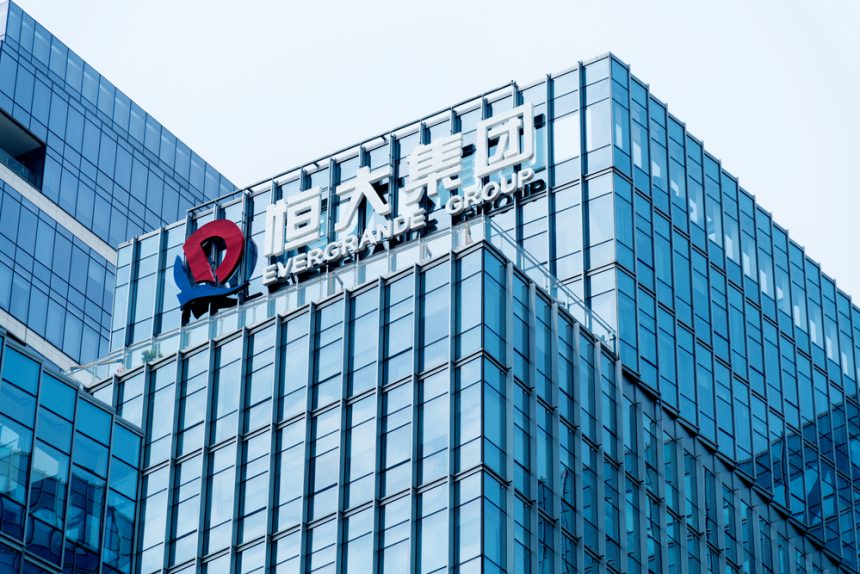
Evergrande stood out because of its sheer size. At the point when a Hong Kong court ordered its liquidation, the company had liabilities of more than 300 billion dollars. That made it the world’s most heavily indebted real estate developer and turned its failure into a problem far larger than a normal corporate default.
The consequences spread through creditors, suppliers, homebuyers and financial markets, helping drag down confidence in the Chinese economy and putting sustained pressure on the country’s growth outlook.
The case is also about accountability
By the time Hui appeared in court, the business itself had already been broken apart by the market, the courts and the loss of confidence around it. Evergrande’s shares had been removed from the Hong Kong market, its restructuring efforts had failed and its reputation had collapsed long before this guilty plea.
That means the legal process is no longer about saving the company. It is about assigning responsibility. For a crisis that caused such broad financial and social damage, the authorities clearly want to show that accountability does not stop at the level of corporate distress. It reaches to the top of the organization.
This gives the trial a wider significance in China’s current economic climate. The property crisis has already undermined confidence in developers and in the old assumptions that supported the sector for years. A high-profile guilty plea by Evergrande’s founder reinforces the sense that the era that produced the boom has ended in both financial and legal failure.
A judgment is still to come, but the message is clear
The court has not yet delivered its final judgment, so the legal process is not complete. Even so, the plea itself already sends a strong signal. One of the most powerful figures of China’s property boom has publicly admitted guilt in a case tied to fraud, bribery and other serious corporate offenses.
That does not resolve the wider fallout from Evergrande’s collapse. Creditors still face losses, the property sector remains under strain and confidence in the old real estate model is still badly damaged. But it does mark a major moment in the long unwinding of the crisis.
Evergrande’s downfall reshaped the market. Hui’s plea now reshapes the story around it. The collapse is no longer only remembered as a financial disaster. It is also becoming a legal judgment on how that disaster was built.