






Regulator Flags In-Store Origin Claims
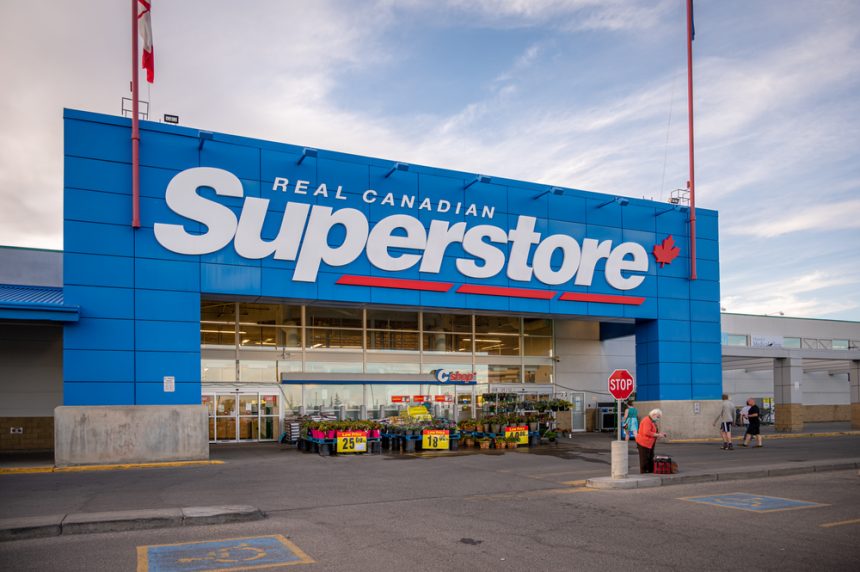
A Toronto location of Real Canadian Superstore has been penalized $10,000 after federal inspectors determined that certain food displays gave shoppers an inaccurate impression about where products came from.
The Canadian Food Inspection Agency confirmed the sanction was issued on Jan. 15, 2026, under the Safe Food for Canadians Act. Investigators found that maple leaf promotional decals were positioned beside product tags for items that were not of Canadian origin, creating what the agency described as a misleading advertisement about provenance.
The case involves store #1033, located on Gerry Fitzgerald Drive in Toronto. The CFIA did not publicly list the specific products involved but said retailers are responsible for ensuring origin claims comply with federal standards.
Increased Attention on Domestic Claims
The penalty arrives during a period of heightened consumer sensitivity around country-of-origin claims. Over the past year, shoppers have increasingly favored Canadian-made goods, influenced in part by geopolitical tensions and tariff policies involving the United States.
In early 2025, the CFIA noted a rise in complaints concerning possible misuse of “Product of Canada” and similar claims. The agency has urged customers and industry participants to report labelling concerns directly.
Loblaw, which operates Real Canadian Superstore, acknowledged the violation in a statement, emphasizing that while systems are in place to maintain accuracy, frequent product sourcing changes can complicate signage updates. The company said it is reinforcing internal processes and apologized for any confusion.
Understanding “Product of Canada”
To qualify as “Product of Canada” for food items, virtually all key ingredients, processing and labour must originate domestically. Only a minimal portion, generally up to two percent, may come from outside the country. Imported components such as spices, vitamins or flavouring agents may be permitted under specific conditions.
Packaging materials sourced abroad do not automatically invalidate the claim. The CFIA has provided examples, such as baked goods produced in Canada using predominantly Canadian ingredients but incorporating minor imported elements.
Distinction From “Made in Canada”
The alternative claim, “Made in Canada,” applies when the product undergoes its last substantial transformation in Canada. Unlike “Product of Canada,” it must be paired with a clarifying statement indicating whether imported ingredients were used.
Consumer research suggests many shoppers confuse the two terms. When definitions are explained, preference typically leans toward products fully identified as Canadian in origin.
The CFIA classifies a $10,000 penalty for a business as a very serious infraction within its administrative monetary penalty framework. The amount may vary based on the severity and commercial context of the violation.