




A growing energy dominance strategy in China is changing how investors assess industrial power, trade flows, and long-term energy security. It combines rapid electrification with state-backed expansion in renewables, grids, and clean technology manufacturing.
The strategy is increasingly framed as a contest with U.S. energy policy. A recent Reuters analysis said Washington is leaning harder on fossil fuels, while Beijing is pushing electrification and low-carbon industries.
That divergence matters for capital allocation. Energy systems now influence competitiveness in data centers, heavy industry, transport, and advanced manufacturing. Financial markets increasingly treat electricity access and technology supply chains as strategic assets.
China’s approach also reflects a security calculation. Reuters reported that Beijing is trying to reduce dependence on imported fuels, even as oil imports remain high. That mix creates pressure to accelerate the deployment of domestic power capacity.
Electrification Drives the China Energy Dominance Strategy
A core pillar of the China energy dominance strategy is economy-wide electrification. Ember reported that electricity accounted for 32% of China’s final energy use in 2023, above U.S. and OECD Europe levels.
That shift is not only about climate targets. Electrification can reduce exposure to imported oil and gas over time. It also supports domestic demand for Chinese-made batteries, EVs, and power equipment.
The scale is already affecting fuel demand patterns. Reuters reported that EVs accounted for more than half of Chinese passenger car sales last year. The same report said that Chinese manufacturers accounted for over 70% of global EV production.
This transition also changes electricity demand growth. The IEA expects strong global electricity demand growth, with China contributing more than half of the increase in some forecasts. That supports continued investment in generation, storage, and transmission.
Some analysts now describe China as an emerging “electrostate.” The term reflects electricity’s rising share in growth, exports, and industrial policy. It also reflects China’s influence over technologies that run electric economies.
Renewables and Grids Scale Faster Than Rivals
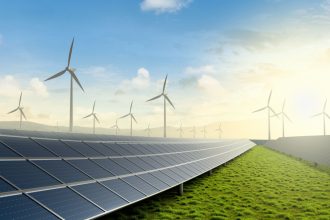
The China energy dominance strategy also relies on the speed of deployment. The IEA said China accounted for almost two-thirds of the world’s grid-connected renewable capacity in 2024. It added over 340 GW of solar and about 80 GW of wind.
The pace is historically significant. The IEA also said China passed its 2030 combined wind and solar target in mid-2024. That milestone arrived six years ahead of schedule.
Reuters cited Chinese government data showing more than 500 GW of new solar and wind capacity installed last year. It also noted that the IEA expects China to account for more than two-thirds of global additions in 2025.
Grid infrastructure is equally important. Large renewable systems require transmission, balancing, and storage. These network investments help convert manufacturing scale into a durable influence in the power market.
For investors, this matters because grid buildout lowers bottlenecks. It can improve utilization rates and support returns across generation, batteries, and industrial electrification. It also strengthens China’s position in exportable energy technologies.
Financial Implications for Global Energy and Industry
The Chinese energy dominance strategy is creating pressure on rival economies to respond. A Reuters column warned U.S. policy volatility could slow catch-up efforts, even if later administrations change course.
The consequences extend beyond climate policy. They include equipment pricing, commodity demand, manufacturing competitiveness, and trade balances. Companies tied to grids, storage, and electrification may face a more China-centered market structure.
China still faces constraints, including its reliance on coal and its exposure to import risks. Reuters reported that oil imports accounted for more than 60% of Chinese consumption in 2025. That vulnerability is one reason the strategy remains aggressive.
Still, the direction is clear for markets. China is pairing domestic electrification with global export strength in clean technologies. That combination is turning energy policy into an industrial strategy on an unprecedented scale.