





A fast food routine and a large stake in the 1990s
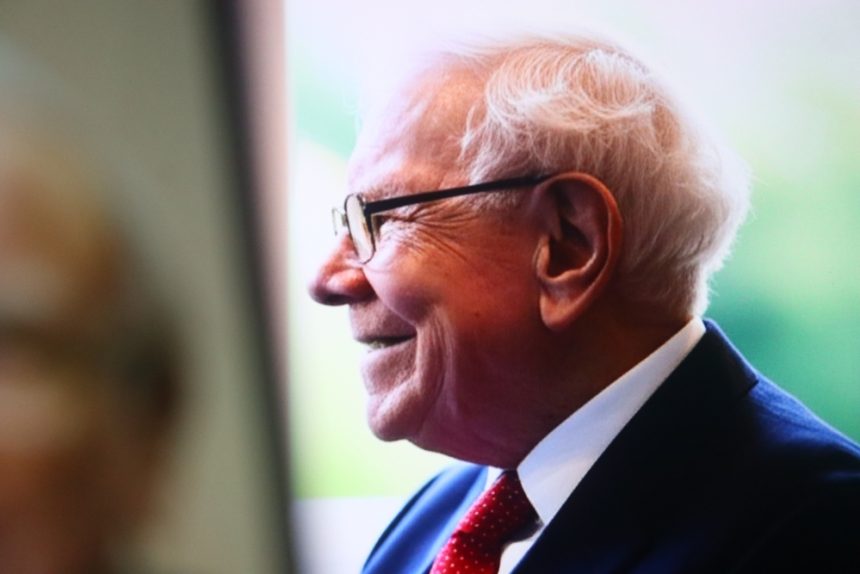
Warren Buffett built a reputation for careful spending habits that persisted even as his wealth grew, including a long running habit of stopping at McDonald’s for breakfast on the way to work. A 2017 HBO documentary described how he would vary his order based on market conditions, spending $2.61 on two sausage patties when stocks were down and opting for a $3.17 bacon, egg, and cheese biscuit when he felt more confident.
That familiarity with the brand once extended well beyond breakfast purchases. At the end of 1996, Berkshire Hathaway held about 30.4 million McDonald’s shares, representing a 4.3% stake valued at roughly $1.4 billion. The holding placed the restaurant chain among Berkshire’s meaningful equity positions at the time, reflecting Buffett’s willingness to own consumer businesses with durable demand.
The exit and Buffett’s unusually blunt admission
Less than two years after Berkshire’s stake size was disclosed, Buffett chose to sell the McDonald’s position. In his 1998 letter to shareholders, he later described the decision as damaging to results, an unusually direct critique of his own trading judgment.
“The portfolio actions I took in 1998 actually decreased our gain for the year,” Buffett wrote. He singled out the McDonald’s sale in particular, adding, “In particular, my decision to sell McDonald’s was a very big mistake. Overall, you would have been better off last year if I had regularly snuck off to the movies during market hours.”
The comments underscored a key aspect of Buffett’s approach that investors often cite: a willingness to acknowledge errors publicly when a decision does not match the long term outcome. For shareholders, the statement also provided a rare window into how the firm evaluates opportunity cost, not only in terms of what was lost immediately, but what was left on the table over time.
How the numbers would look if Berkshire had held
The timing of the sale proved painful as McDonald’s later entered an extended stretch of performance that stood out even among established blue chips. Since 2003, McDonald’s stock finished the year lower only twice, with many years posting double digit gains. The company’s share price is now just over $341.
Based on the stake Berkshire held in late 1996, the position would be worth about $10.3 billion today if it had been maintained, excluding dividends. The comparison highlights how even a single decision to exit a high quality business can compound into a large difference over decades, especially when the company’s long run returns are reinforced by resilience and frequent periods of strong annual performance.
Holding discipline, missed tech, and Munger’s warning on humility
Despite the McDonald’s outcome, Buffett has repeatedly argued that patience is central to building wealth in equities. In 1996, he wrote, “If you aren’t willing to own a stock for 10 years, don’t even think about owning it for 10 minutes,” and urged investors to build a portfolio of companies whose combined earnings rise over time, lifting market value along the way.
Buffett has also acknowledged that holding is not the only challenge. He has said that failing to recognize transformative businesses early can be costly, pointing to his reluctance for years to buy newer technology leaders such as Amazon. He later said that hesitation “cost people a lot of money at Berkshire,” and he explained that he underestimated founder Jeff Bezos and the quality of execution, saying, “I did not think could succeed on the scale he has. I underestimated the brilliance of the execution.”
These reflections were echoed by his longtime partner, the late Charlie Munger, who often cautioned that even accomplished investors can struggle in fast moving sectors. At the 2018 Berkshire Hathaway annual shareholder meeting, Munger said, “We were not ideally located to be high-tech wizards,” adding, “How many people of our age quickly mastered Google? I’ve been to Google headquarters. It looked to me like a kindergarten.”
Munger’s broader guidance centered on the need to keep updating one’s thinking. “If you’re going to live a long time, you have to keep learning what you formerly knew is never enough,” he said. He also warned that investors who fail to revise their views are at a permanent disadvantage, using a metaphor about being unprepared for a difficult contest.
Together, the McDonald’s sale and the later reflections on missed technology opportunities form a consistent message from Berkshire’s leadership. Long term ownership remains a core principle, but so does the discipline of reexamining judgments, recognizing mistakes, and improving the decision process rather than defending past calls.