





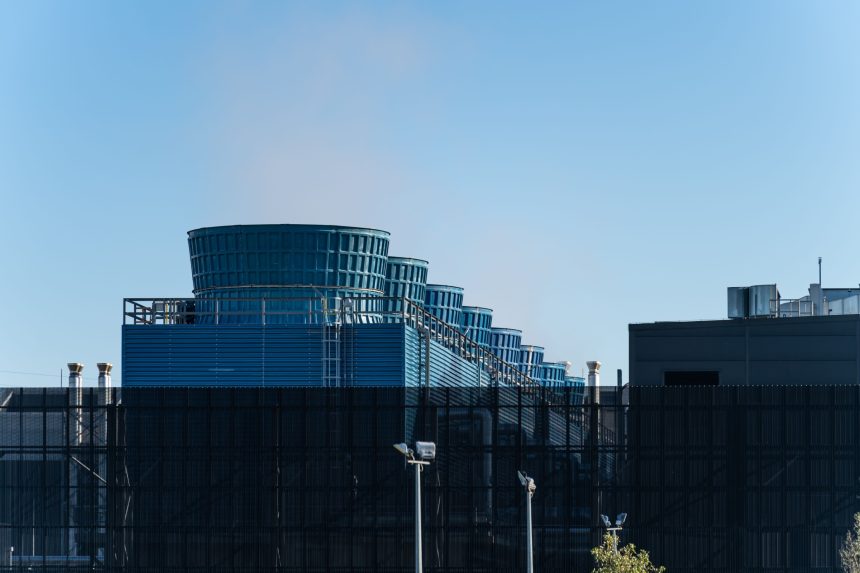

EU data center emissions secrecy is facing renewed scrutiny after reporting said major U.S. technology firms helped shape confidentiality rules that block public access to site-level environmental data. The issue matters as Europe prepares tougher oversight of data centers while AI demand drives fresh construction, electricity use, and emissions concerns. A Guardian investigation said Microsoft and industry groups pushed for secrecy language that later appeared in EU law.
The legal basis sits in Commission Delegated Regulation (EU) 2024/1364, adopted in March 2024. The rule supplements the EU’s Energy Efficiency Directive by setting a reporting scheme for in-scope data centers. It requires operators to submit efficiency and sustainability information, but it also says that reported information “shall be considered confidential” when it affects commercial interests.
Reporting Exists, but Public Access Is Limited
The EU already has a reporting framework for larger data centers. The Commission says the rules are part of a wider package on data center energy efficiency, alongside a future rating scheme and possible minimum performance standards. That means operators must disclose information to authorities, even if the public cannot see most site-level details.
The confidentiality provision is central to the dispute. The regulation states that information reported to the database should be treated as confidential where it affects commercial interests under EU access-to-documents and environmental-information rules. Legal and policy observers say that approach sharply narrows outside scrutiny of energy use, water use, and related sustainability metrics at individual facilities.
Industry summaries published after the rule’s adoption also noted the same point. The European Data center Association said individual information reported by operators would not be made public. A legal analysis from DLA Piper likewise said the regulation requires confidentiality for the submitted information and key performance indicators.
Lobbying Claims Raise New Political Pressure
The new controversy comes from the claim that the secrecy clause closely tracked industry lobbying requests. The Guardian and EUobserver both reported that Microsoft and DigitalEurope, whose members include major U.S. tech companies, sought confidentiality protections during the rulemaking process. Their accounts said parts of the final language reflected those requests very closely.
That accusation matters because the public policy context has changed. Data centers were already politically sensitive in Europe before the AI boom accelerated. Now, large cloud operators and AI infrastructure groups are expanding rapidly, making the environmental footprint of individual facilities more important to local communities, researchers, and regulators.
The criticism is not only about emissions totals. It is also about transparency in markets where a few companies dominate infrastructure. If only national or aggregate figures become public, outside researchers may struggle to compare operators or assess whether specific sites impose disproportionate burdens on local grids and water systems. That weakens public accountability as demand for AI-linked data centers climbs.
The Commission Is Still Expanding the Framework
At the same time, the EU is moving ahead with more data center regulation, not less. In March 2026, the Commission launched a call for feedback on a rating scheme for EU data centers. It said the regulation is expected in the second quarter of 2026 as part of a broader energy efficiency package.
That next step could make sustainability oversight more visible, but it may not fully solve the disclosure problem. The Commission says the package will assess submitted data, introduce ratings, and support future minimum performance standards. However, current public materials suggest that much underlying site-level information may still remain confidential under the existing reporting rule.
For investors and infrastructure operators, the dispute shows how environmental transparency is becoming a business risk, not just a policy matter. Data centers sit at the intersection of AI growth, electricity demand, and local permitting politics. If disclosure rules are seen as too protective of operators, pressure for stricter reporting or legal challenges could rise.
Why the Debate Matters Now
The timing is especially important because AI infrastructure spending is still expanding. More facilities mean more scrutiny of energy efficiency and emissions. If Europe wants to promote greener digital infrastructure, it will need credible reporting that satisfies both operators and the public. The current EU data center emissions secrecy dispute suggests that balance remains unsettled.
For now, the underlying rule is in force, and the broader EU package is still evolving. That leaves three parallel questions for markets. One is whether confidentiality rules will be challenged. Another is whether the rating scheme will provide meaningful transparency. The third is whether fast-growing AI data center operators can maintain public trust while keeping facility-level metrics out of view.