



Oil shock adds new hurdle to easing before summer
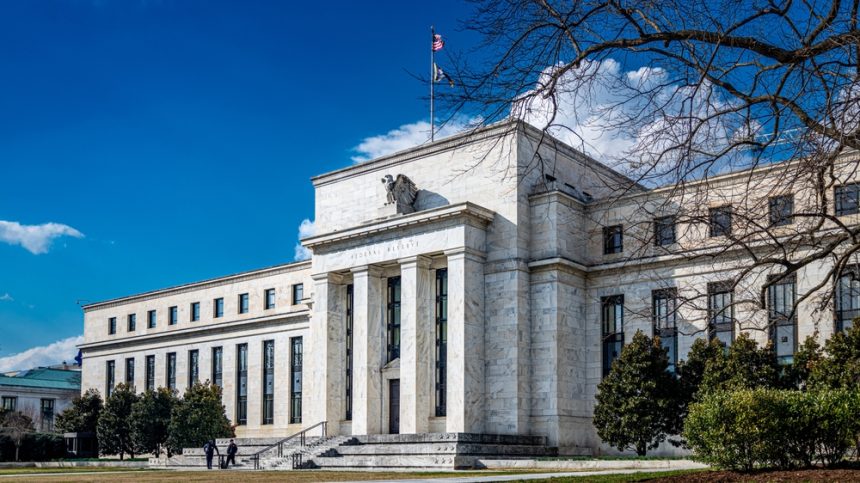
The U.S.-Israel war with Iran is raising fresh obstacles for Federal Reserve interest rate cuts, just as President Donald Trump appears poised to install a central bank chair more aligned with his preference for lower borrowing costs. Economists say policymakers were already leaning toward holding rates steady until at least the summer, and the conflict now adds another variable the Fed may want to observe before shifting policy.
The backdrop is sensitive because inflation has remained a core constraint for the Fed. Minneapolis Fed President Neel Kashkari, a voting member this year, said the prospect of extended headline inflation would require close attention. “Now we need to think about this potentially new shock hitting the global economy,” he told Bloomberg at a financial event on Tuesday.
Rising energy prices are the most direct channel. The war’s inflation effect will hinge on how long the conflict lasts and whether it disrupts flows through the Strait of Hormuz, a narrow corridor used for roughly one in five barrels of global oil shipments. The attacks have already pushed U.S. gasoline prices higher, and economists expect additional increases if the conflict drags on.
Warsh expected to push for easier policy, but votes are limited
The conflict also lands at a moment of potential leadership change at the Fed. Kevin Warsh, Trump’s nominee to lead the central bank, would take over when Chair Jerome Powell’s term ends in May, if confirmed by the Senate. Investors widely expect Warsh to press for a faster pace of rate cuts than the Fed’s prior projections suggested.
In the Fed’s December projections, officials estimated only one rate cut in 2026. Warsh has argued that AI-driven productivity could support lower rates, a framework that implies growth could remain solid even with easier monetary policy.
Several senior officials have signaled skepticism toward that idea, including Fed Governor Michael Barr and Cleveland Fed President Beth Hammack. The internal arithmetic matters because Warsh would hold only one vote on the Fed’s 12-person rate-setting committee. Even as chair, he would need a majority of colleagues to approve cuts.
Ed Yardeni, president of Yardeni Research, said the oil shock presents clearer near-term consequences than the longer-run productivity story. He said the Fed has to respond to present conditions and that AI productivity is unlikely to be enough to secure support for cuts if inflation risks intensify.
Goldman inflation scenario highlights risk to the 2% target path
Some market forecasts still assume energy disruption is temporary. Goldman Sachs analysts told clients Monday they expect disruptions to be short-lived and oil prices to fall. But Goldman also outlined a scenario where sustained oil gains lift inflation, warning that annual CPI inflation could rise from 2.4% in January to 3% by year-end if energy costs remain elevated.
That outcome would undermine Goldman’s forecast for inflation to end 2026 at 2%, matching the Fed’s target. For the central bank, another inflation impulse would be unwelcome after years of missing the inflation goal. James McCann, senior economist at Edward Jones, said in a Tuesday note that central banks are unlikely to welcome a renewed inflation push and that the Fed could be more sensitive to price increases given it has not reached its target since early 2021.
Tariff policy swings add a second uncertainty the Fed is watching
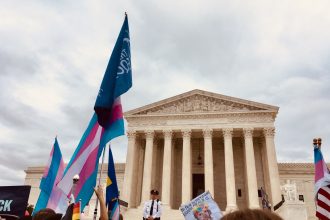
Beyond geopolitics, the Fed is also confronting uncertainty tied to trade policy. The U.S. Supreme Court recently struck down a bulk of Trump’s tariffs imposed through emergency powers, forcing investors and businesses to reassess what tariff regime will ultimately govern imports. Kashkari said the ruling created new uncertainty about which legal tools the administration may use, how closely it can replicate the original tariff structure, and what the final policy will look like.
He said uncertainty itself can act as a drag on economic activity because businesses delay decisions when policy is unpredictable. After the court ruling, Trump announced a 10% global tariff rate and then raised it to 15% shortly afterward.
Kashkari said he does not expect inflation to rise sharply if the administration restores tariffs that were struck down through other legal mechanisms, but he still sees the shifting policy environment as another reason for the Fed to wait and monitor how the economy responds.
Chicago Fed President Austan Goolsbee also warned about the economic effect of unpredictability, saying businesses face more question marks when policy is unclear, according to Bloomberg reporting cited in the account.
Fed faces a narrower window for cuts as risks accumulate
With the war pushing energy prices higher and tariff rules shifting again, economists say the Fed is likely to remain cautious in the near term. Officials typically prefer to observe potential shocks over several months before adjusting policy, and the combination of inflation risk and policy uncertainty makes it harder to justify a rapid pivot toward easing.
If Warsh takes over in May, he may find that the political desire for lower rates runs into the practical constraints of inflation, committee voting dynamics, and a global environment that has become more volatile. In that setting, the timeline for rate cuts may depend less on leadership preference and more on whether inflation pressures recede quickly enough to give the Fed room to move.