





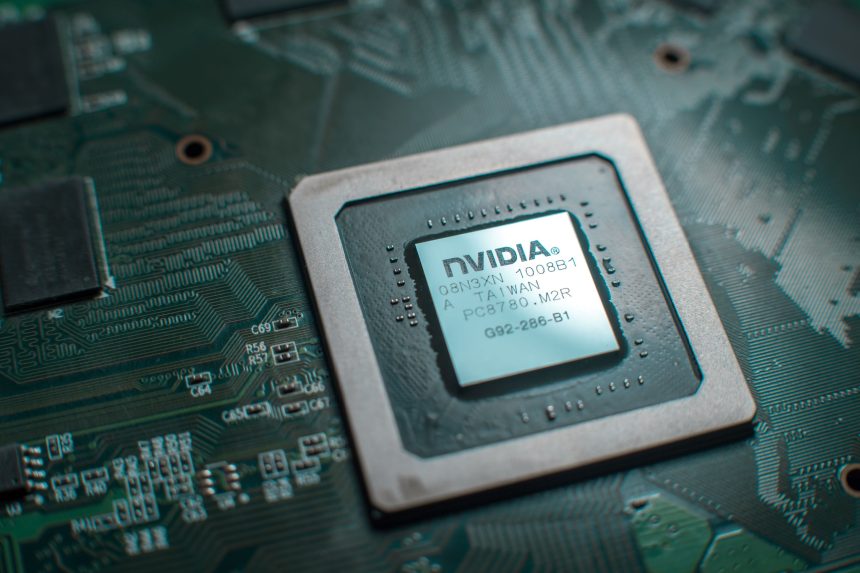

The NVIDIA cleaner earnings policy will change how the company presents adjusted results starting in fiscal 2027. NVIDIA said its non-GAAP financial measures will no longer exclude stock-based compensation expense beginning in the first quarter of fiscal 2027. That shift brings adjusted earnings closer to the company’s GAAP result.
The company disclosed the change with its fourth-quarter and fiscal 2026 results on February 25, 2026. Chief Financial Officer Colette Kress said stock-based compensation is a foundational part of Nvidia’s pay program. The company also recast prior non-GAAP figures to help investors compare periods more consistently.
The change matters because many investors and analysts focus heavily on non-GAAP earnings per share. Tech companies often exclude stock-based compensation from adjusted results, even though it is a recurring cost. NVIDIA’s move reduces reliance on that long-debated earnings adjustment.
What Nvidia Is Changing in Its Earnings Presentation
Under the new policy, Nvidia will include stock-based compensation inside non-GAAP gross margin, operating expenses, operating income, net income, and diluted earnings per share. The company’s first-quarter fiscal 2027 outlook already reflects that new approach. NVIDIA said it expects first-quarter non-GAAP operating expenses to be about US$7.5 billion under the revised method.
The company still plans to exclude acquisition-related and other costs from those adjusted measures. In other words, Nvidia is not abandoning non-GAAP reporting altogether. It is narrowing one of the largest differences between adjusted and statutory earnings.
That distinction is important for investors reading quarterly releases. Non-GAAP figures will remain management’s preferred adjusted view. However, those figures should now look less detached from the company’s true compensation costs. That can make earnings quality easier to assess.
Why Stock Compensation Matters So Much
Stock-based compensation is a real economic cost, even though it is recorded as non-cash. It can dilute existing shareholders over time. Companies often offset that dilution with share buybacks, which require actual cash.
NVIDIA’s stock compensation has become more material as the company’s scale and share price have surged. Reporting said stock-based compensation rose from about US$4.7 billion in fiscal 2025 to about US$6.4 billion in fiscal 2026. NVIDIA’s annual filing also said unearned stock-based compensation expense totaled US$14.8 billion as of January 25, 2026.
Because of those amounts, excluding stock pay can materially lift adjusted profit measures. That is why the accounting choice has long drawn criticism from some investors. The debate centers on whether recurring employee equity awards should be treated as ordinary operating expenses.
NVIDIA’s decision suggests management believes the business is strong enough to absorb a tougher presentation. The company reported US$68.1 billion in fourth-quarter revenue and US$22.1 billion in GAAP net income. That scale gives it more flexibility than many smaller software companies.
What Investors Should Watch Next
The immediate effect is likely clearer comparability between Nvidia’s GAAP and non-GAAP results. Analysts may also face pressure to focus more on statutory profitability and cash generation. NVIDIA still generates substantial free cash flow, which can support that transition.
The broader significance may extend beyond Nvidia. Reporting said most major tech companies still exclude stock-based compensation from adjusted earnings. NVIDIA’s decision could increase pressure on peers to justify keeping that exclusion. That is especially true for companies whose adjusted profits depend heavily on that accounting choice.
Investors should also watch whether the new presentation changes consensus estimates or valuation discussions. A lower adjusted earnings figure does not, by itself, change underlying cash flows. Still, it can influence how analysts compare Nvidia with other semiconductor and software companies. It may also sharpen debate over what counts as “clean” earnings in AI-driven markets.
The Policy Shift Comes From a Position of Strength
NVIDIA is making this change while demand for its AI products remains exceptionally strong. The company said first-quarter fiscal 2027 revenue is expected to reach US$78.0 billion, plus or minus 2%. That outlook does not assume any data center compute revenue from China.
The timing matters because companies rarely adopt stricter adjusted reporting during operational weakness. NVIDIA is doing so near peak investor confidence. That may help the market treat the shift as a governance improvement rather than a warning sign.
For shareholders, the main takeaway is straightforward. The Nvidia cleaner earnings policy will not alter the business itself. It will change how one of the market’s most important companies defines adjusted profitability, and that may influence expectations well beyond Nvidia.