






Revenue forecasts move higher despite fuel pressure
Many major US airlines have increased their first quarter revenue expectations, signaling that passenger demand has remained resilient even as higher jet fuel prices add pressure to operating costs. The updated outlooks suggest that carriers are finding enough pricing power and booking strength to absorb part of the impact from the conflict in Iran, which has driven fuel expenses higher across the sector.
The revised forecasts arrived as airline executives spoke publicly about a quarter shaped by both stronger sales and rising costs. Fuel is typically one of the largest expenses for airlines and can account for more than one fifth of total operating costs, depending on the business model. This quarter, that burden has increased at the same time carriers have also faced disruptions from winter storms and broader market uncertainty.
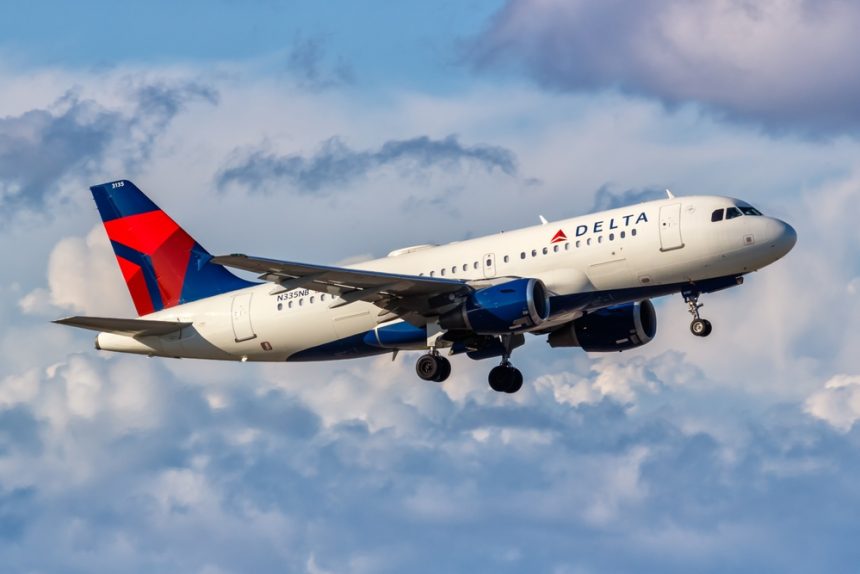
Even so, the latest guidance points to a favorable revenue environment. Delta Air Lines, American Airlines and JetBlue Airways each raised their expectations for the period. The market responded positively, with shares of Delta and American rising roughly 5 percent in early trading, reflecting investor confidence that revenue momentum may help preserve earnings even in a more expensive cost environment.
Delta points to premium, loyalty and corporate strength
Delta said it now expects first quarter revenue growth in the high single digits, an improvement from its earlier projection of as much as 7 percent. The airline maintained its adjusted earnings outlook of 50 cents to 90 cents per share, indicating that stronger sales are likely to offset a significant portion of the cost increase it has absorbed so far.
Chief Executive Ed Bastian said Delta has taken a hit of about $400 million in the quarter, driven by both rising fuel prices and a difficult winter period marked by storms. Despite that, he described demand as exceptionally strong. According to the company, the improvement has been broad rather than concentrated in a single category. Main cabin sales, premium bookings and loyalty related revenue all contributed to the stronger performance, while domestic and international unit revenues are each growing at a mid single digit pace from a year earlier.
Bastian also said Delta is benefiting from a customer mix that includes higher spending travelers and corporate accounts. That profile has helped support booking trends even during a period of geopolitical tension. He noted that the airline recorded eight of the 10 strongest sales days in its history during the current quarter, with five of those coming in the final part of March. Delta said bookings are up 25 percent from a year earlier, aided in part by softer prior year comparisons when travelers had pulled back amid tariff concerns. The airline also highlighted what it described as the strongest balance sheet in its history.
American and JetBlue also lift guidance
American Airlines also issued a stronger revenue outlook. In a securities filing, the carrier said it now expects total revenue to rise by more than 10 percent in the first quarter. Its previous guidance had called for growth of 7 percent to 10 percent. Chief Executive Robert Isom said the airline is seeing very strong revenue performance and expressed confidence that the trend will continue as the year progresses.
That improvement comes despite another large cost increase. Isom said American expects approximately $400 million in additional first quarter expenses, with higher fuel prices among the main reasons. His comments underscored the current operating reality for airlines, where better demand is not eliminating cost pressure but is helping reduce the damage to margins.
JetBlue joined the group of carriers raising expectations. The airline had previously forecast operating revenue ranging from no change to an increase of 4 percent. It now expects growth of 5 percent to 7 percent. JetBlue said demand strengthened during the quarter and helped offset both fuel costs and the effect of winter weather disruptions. It also reported improvement in both its premium and core cabin segments, suggesting that the recovery in demand was broad based across fare categories.
Higher fuel costs remain the key risk for 2026
United Airlines did not change its formal guidance, but management struck a similarly constructive tone. Chief Executive Scott Kirby said the revenue environment remains very strong and that United aims this year to fully offset higher fuel prices. Earlier in March, Kirby had warned that rising airfares were likely as carriers seek to recover higher energy costs from passengers.
At an investor conference on Tuesday, Kirby said the longer fuel stays elevated, the more significant the competitive effects could become. In his view, sustained cost pressure may widen the gap between airlines with stronger loyalty programs and customer bases and those with less commercial resilience. That suggests current pricing power may become a larger strategic advantage if energy markets remain volatile.
Southwest Airlines took a steadier position, saying the forecast it issued with fourth quarter results in January remains on track. Chief Executive Bob Jordan said the company is seeing broad revenue strength, supported in part by new products and initiatives. At the same time, he acknowledged that jet fuel remains an unpredictable variable for the industry.
The latest airline updates show a sector confronting a familiar challenge with an unusual degree of revenue confidence. Travel demand has so far remained strong enough to counter higher fuel prices and weather related disruption. Whether that balance can hold through the rest of 2026 will depend largely on energy markets and on how far airlines can continue passing added costs through to fares without slowing demand.