





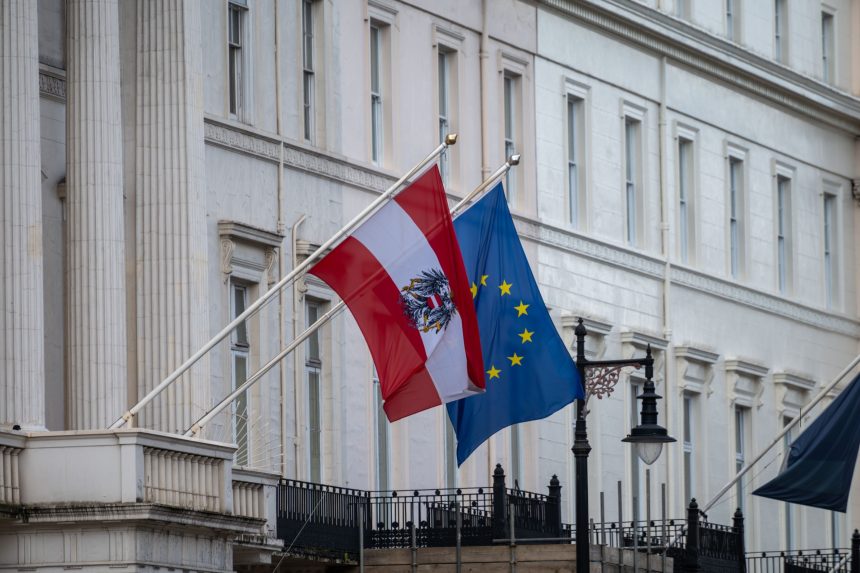

The Austrian neutrality airspace dispute intensified on April 2 after Vienna refused U.S. requests to use Austrian airspace for military operations linked to the war with Iran. Austria’s defense ministry said the decision was based on the country’s neutrality law. Officials said requests are examined individually, but those connected to military action in the conflict cannot be approved.
The decision adds Austria to a broader group of European countries resisting deeper involvement in the conflict. The refusal came as Washington pressed allies for logistical support while the war continued to unsettle energy markets and disrupt shipping through the Strait of Hormuz. Austria’s position underscores how neutrality is shaping operational decisions across Europe amid growing pressure on allies.
The issue is significant because overflight access can affect speed, routing, and flexibility for military operations. Denials by neutral or reluctant countries can force longer routes and complicate logistics. In this case, Austria’s decision also carries symbolic weight. It signals that even some close Western partners are drawing legal and political lines around the Iran war.
Vienna Says Its Neutrality Law Leaves Little Room
Austria’s defense ministry said the refusal was grounded in long-standing neutrality obligations. The country has maintained military neutrality since 1955, and that status remains central to its foreign and defense policy. In practice, Austrian authorities said requests linked to armed conflict must be assessed against that legal framework. In this case, they concluded U.S. military flights related to Iran operations could not pass.
That explanation matters because Austria was not framing the decision solely as a temporary political rebuke. Instead, it presented the refusal as a legal consequence of neutrality. This helps Vienna argue that it is applying established principles rather than taking sides in the conflict. That distinction may matter as pressure mounts from Washington and from other European capitals.
Austria’s stance also fits a wider pattern among neutral states. Recent reporting showed Switzerland rejected most U.S. military overflight requests tied to the conflict unless they were clearly unrelated to combat or were humanitarian in nature. That parallel suggests neutrality is becoming a practical constraint on allied planning, not only a diplomatic talking point.
Europe’s Support for Washington Has Limits
The Austrian neutrality airspace dispute comes as several European governments show reluctance to support U.S. military operations against Iran. Reporting earlier this week said France, Italy, and Spain had also pushed back on parts of Washington’s requests connected to the war. That broader resistance reflects concern about escalation, domestic political backlash, and legal exposure.
European officials have also signaled discomfort with how the war began and with Washington’s expectations for allied support afterward. On April 1, Emmanuel Macron said the United States could not complain about insufficient backing for an operation it chose to undertake alone. Those remarks reflected a widening transatlantic divide over both strategy and burden-sharing.
The European Union’s diplomatic leadership has taken a similar line. On March 17, EU foreign policy chief Kaja Kallas urged the U.S. and Israel to end the war and pursue a diplomatic exit. She also said that European countries were not ready to send their personnel into harm’s way to reopen Hormuz militarily. Austria’s refusal fits squarely inside that larger European caution.
The Military and Economic Stakes Are Both Rising
The dispute is not only political. It has real operational and market consequences. Restricted access to airspace can slow deployments and complicate support missions. At the same time, the conflict has already strained energy markets. Disruption in and around Hormuz has driven volatility in crude prices and increased concern about inflation and shipping costs.
For Austria, the calculation appears to be that strict neutrality carries fewer risks than even limited military facilitation. Austrian officials have not suggested a broader rupture with the United States. Instead, they are drawing a narrow but firm boundary around participation in active combat support. That allows Vienna to preserve relations with allies while maintaining legal consistency at home.
The decision may also resonate domestically. Neutrality remains a powerful political principle in Austria, even as security conditions in Europe have changed. Any move seen as enabling combat operations in the Gulf could provoke internal criticism. By invoking the neutrality law directly, the government is protecting itself against claims that it is drifting into a war by stealth.
More Requests Could Test Europe Again
The next question is whether Austria’s refusal remains an isolated legal decision or becomes part of a larger European pattern. If the war continues and Washington seeks broader logistical support, more overflight and transit requests are likely. That would force additional governments to define where support ends and noninvolvement begins. Austria has answered that question clearly for now.
For financial and policy watchers, the significance goes beyond one country’s airspace. The Austrian neutrality airspace dispute highlights the limits of allied cohesion during a fast-moving regional war. It also shows how legal neutrality, political caution, and market stress are converging in Europe.