




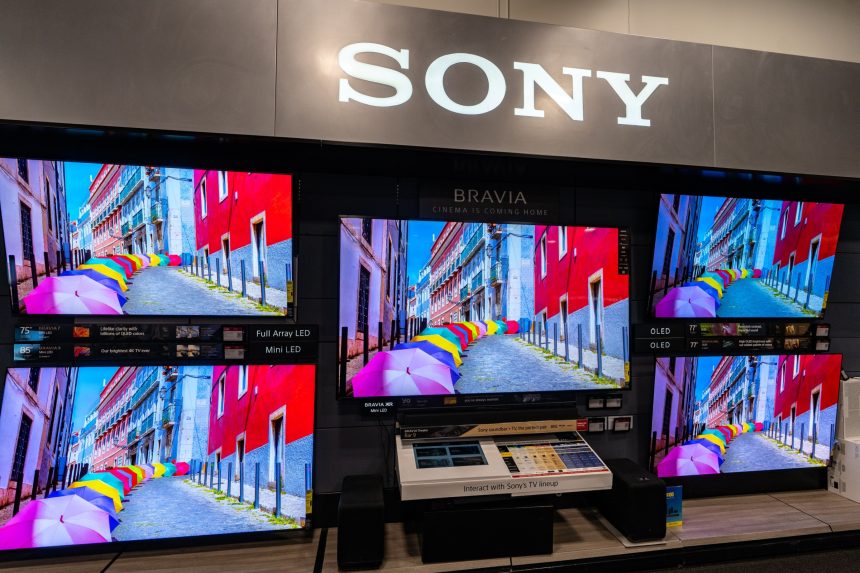

The Sony True RGB TV is Sony’s latest attempt to reset expectations in the premium television market. A hands-on report this week said the new technology could deliver brighter images, purer colors, and better off-angle viewing than conventional Mini LED sets. Sony has not yet announced final models, prices, or release dates, but the company says the first televisions using the system will arrive later this spring.
The development matters because television makers are searching for a stronger reason to revive high-end demand. OLED remains the benchmark for contrast, while standard Mini LED sets now compete heavily on price. Sony is betting that independently controlled red, green, and blue backlights can create a new premium tier between today’s top LCD TVs and OLED panels.
How Sony’s New Backlight Works
The Sony True RGB TV uses separate red, green, and blue LEDs in its backlight system. Sony said each primary color can be driven independently rather than passing white or blue light through filters. That design aims to improve color purity and widen the visible color range on large screens.
Sony first described the underlying technology in March 2025. In that announcement, the company said its independent-drive RGB LED system was designed for large displays and could control the three primary colors individually. Sony said that it should produce more vibrant images and more accurate color reproduction.
Recent first-look reports added that Sony pairs the RGB backlight with a new backlight driver and updated image processing. Those reports said the setup reduces reliance on color filtering and gives Sony more precise control over brightness and saturation. That could help the company improve picture quality in areas where LCD sets have historically struggled.
Why Sony Thinks It Can Beat Regular Mini LED
The commercial case for the Sony True RGB TV rests on better color volume and brightness. Business Insider’s early hands-on report said the technology appeared to outperform regular Mini LED and QLED sets in those areas. Other first impressions said Sony’s system also looked stronger than OLED in some especially bright scenes.
That does not mean Sony has built an outright OLED replacement. OLED still has a major contrast advantage because each pixel emits its own light and can be completely turned off. Several preview reports stressed that Sony has not yet published full specifications, measured performance data, or side-by-side retail pricing.
Still, Sony may have found a clearer way to improve LCD performance without abandoning its existing premium television strategy. RGB backlighting can raise brightness and maintain better color intensity at higher luminance levels. That matters in living rooms, where buyers often value daytime performance as much as dark-room contrast.
The Premium TV Market Is Entering a New Race
The Sony True RGB TV arrives as 2026 becomes a major year for RGB LED televisions. Wired reported earlier this year that RGB LED was emerging as one of the most important new directions in premium TV design. Rival brands have also been pushing similar concepts, especially in the Mini LED category.
That competitive backdrop matters financially. Premium televisions are a slower-growth category than smartphones or PCs, and manufacturers need visible innovation to protect margins. New display technologies can support higher prices and give buyers a reason to upgrade before their current sets fail. Sony’s branding choice, “True RGB,” also suggests the company wants to distinguish its implementation from rival versions.
Sony also faces pressure to show it can still lead in display engineering. The company has strong brand equity in high-end televisions, but price competition from Samsung, TCL, and Hisense has intensified. A visibly better picture could help Sony defend premium pricing, especially if RGB sets become the next status category in home entertainment.
What Buyers and Investors Still Need to See
Important details remain missing. Sony has confirmed the True RGB name and broad technology goals, but it has not yet disclosed model names, screen sizes, pricing, or full release timing. That means the market still lacks the information needed to judge mass-market appeal.
For buyers, the unanswered question is value. If Sony’s RGB televisions deliver clearly better brightness and color without an extreme price jump, they could become strong alternatives to flagship OLEDs. If prices land too high, the new technology may remain a niche showcase product.
For investors and industry watchers, the issue is broader than one product line. The Sony True RGB TV is an early test of whether RGB LED can become a durable premium category. If it succeeds, it could shape the next upgrade cycle in televisions and shift the balance between OLED and high-end LCD technology.