





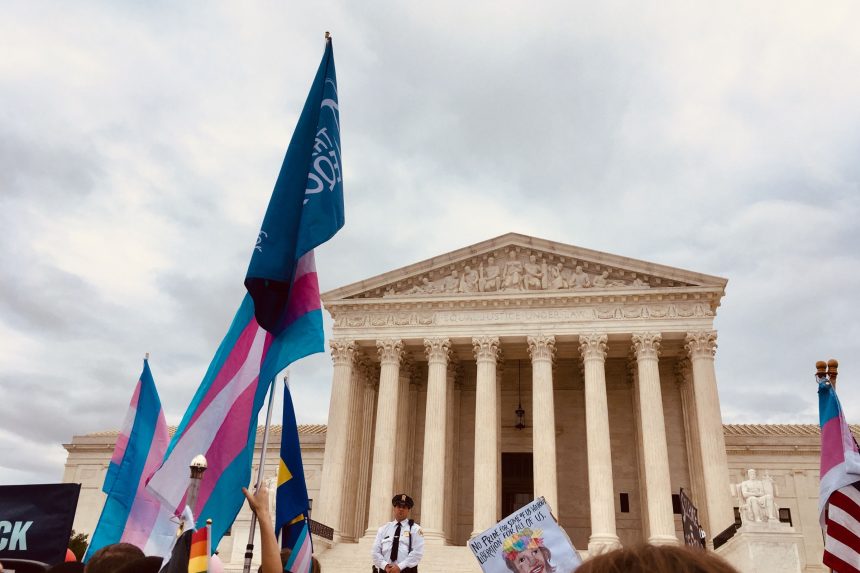

The Massachusetts school gender policy ruling remained in place on April 20 after the U.S. Supreme Court declined to hear a challenge from parents in a Ludlow, Massachusetts, school dispute. The case centered on whether teachers and administrators violated parental rights by using a student’s chosen name and pronouns at school without informing the parents unless the child agreed. The court’s refusal leaves intact lower-court rulings that rejected the lawsuit.
The dispute arose at Baird Middle School in Ludlow. According to court filings, the student, then 11, identified as “genderqueer” and asked staff to use a different name and pronouns at school. The student also asked staff to keep using the original name and female pronouns in communications with the parents. The parents later sued the town, school committee, and school officials.
The parents argued that school officials had undermined their constitutional right to direct their child’s upbringing and care. They said the actions of teachers and staff concealed important information from them and interfered with their parental authority. Lower courts disagreed, and the Supreme Court’s decision means those rulings will stand.
Lower Courts Rejected the Parents’ Claims
The case had already been dismissed twice before it reached the Supreme Court. A federal judge threw it out in 2022. Then, in 2025, the 1st U.S. Circuit Court of Appeals upheld that dismissal. The appeals court concluded that the parents had not shown that the school had deprived them of their constitutional rights.
The appellate court took a narrow view of what the school had done. It said that using a student’s chosen name and pronouns at school did not amount to medical treatment. It also said the policy did not restrain the parents’ conduct outside school or force the child to hide information. In the court’s view, the protocol mainly allowed the student to express identity at school without fear of backlash at home.
That reasoning was important because the parents framed the case as one about fundamental rights under the 14th Amendment’s due process protections. The appeals court acknowledged that parents have broad constitutional rights in raising children. But it said the facts alleged here did not show those rights had been unlawfully overridden.
Student Privacy Cases Keep Reaching the Court
The Massachusetts school gender policy ruling is part of a wider national legal fight over student privacy and parental notification. Across the United States, schools and lawmakers have struggled over how much discretion students should have when asking staff to use different names or pronouns at school. These disputes often pit parental-rights arguments against policies designed to protect student privacy and safety.
The Supreme Court has repeatedly declined to fully step into similar cases. In 2024, it turned away related challenges from Wisconsin and Maryland. More recently, on March 2, the justices blocked similar measures in California that could limit sharing gender-identity information with parents without the child’s permission. That means the court is not treating every case the same way, but it is clearly facing mounting pressure to define the boundaries.
The larger legal backdrop has become more charged in recent years. The court has already weighed major questions involving transgender rights, including a June 2025 ruling that upheld Tennessee’s ban on gender-affirming care for minors. It also heard arguments in a separate case over laws that bar transgender athletes from girls’ and women’s teams, with that ruling still pending.
Why the Decision Matters Now
The Supreme Court’s action on Monday was not a full opinion on the merits. By declining the case, the justices did not endorse every aspect of the lower-court reasoning. But the practical effect is significant. The Ludlow school district’s approach survives, and the parents’ lawsuit is over.
For schools, the outcome suggests that at least some lower-court rulings are willing to treat student name-and-pronoun privacy as distinct from medical care or formal transition decisions. For parents’ groups, the result is a setback in efforts to broaden constitutional claims against such policies. For advocates of student privacy, it is a sign that some school protections can withstand challenge, at least under the facts presented here.
The case also shows how unresolved the national legal landscape remains. The Supreme Court continues to receive disputes tied to gender identity, parental authority, and school policy. Even without a full ruling here, the justices are likely to face related questions again soon. As more states, districts, and families press these issues in court, the boundaries between parental rights and student privacy will remain a central legal battleground.