




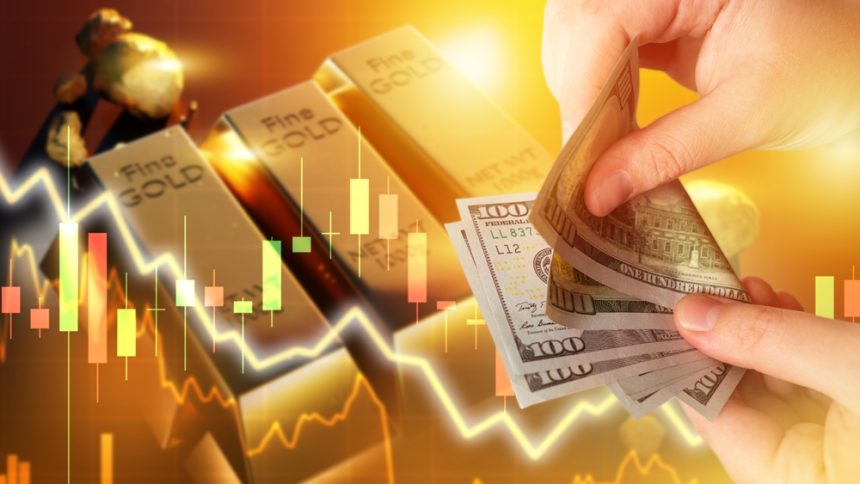

Gold traded around $5,178 per ounce at 9:15 a.m. ET on Tuesday, down $17 from the prior day’s level of $5,195, but still up sharply versus a year ago. The metal has gained roughly $2,244 over the past 12 months, putting the annual increase at about 76% based on the prices cited.
Recent price action underscores gold’s role as a portfolio diversifier in periods of uncertainty, even as it does not consistently outperform equities during strong growth cycles. Long-run comparisons frequently cited by market commentators show stocks delivering higher average annual returns than gold over multi-decade periods, while gold tends to attract flows when investors prioritize capital preservation.
Where Gold Stands Versus Recent Benchmarks
Gold’s move on the day was modest relative to the scale of the past year’s advance. On a shorter horizon, the metal was higher than a month ago, suggesting the broader uptrend remains intact despite daily volatility.
| Gold Price Reference | Price per Ounce | Change |
|---|---|---|
| Current (9:15 a.m. ET) | $5,178 | — |
| Yesterday | $5,195 | -0.33% |
| One Month Ago | $5,072 | +2.09% |
| One Year Ago | $2,934 | +76.48% |
Spot Gold, Futures, and Why Pricing Moves Fast
Investors often reference spot gold as the baseline price because it reflects the rate for immediate settlement in over-the-counter transactions. In practice, “spot” functions as a real-time barometer of demand and liquidity, and it can change frequently as market conditions shift.
Gold futures can trade above or below spot. When futures prices are higher than spot, the market is in contango, a structure often linked to financing and storage costs. When futures trade below spot, it is called backwardation, a less common setup that can appear during tight supply conditions or intense near-term demand.
How Investors Access Gold and the Role of Spreads
Many investors gain exposure through vehicles such as gold-backed products or retirement structures like a gold IRA, which can reduce the practical challenges of storing physical metal. Physical ownership remains an option, but it introduces costs tied to storage, insurance, and security.
For traders, one key cost is the price spread, the gap between the ask (what buyers pay) and the bid (what sellers receive). A tighter spread generally signals higher liquidity and more active trading conditions, while wider spreads can appear during volatility or when dealers adjust to shifting risk.
Precious Metals Snapshot
Gold’s relative stability is one reason it is often paired with other metals for diversification. The same update cited prices for several major precious metals at 9:15 a.m. ET:
| Metal | Price per Ounce |
|---|---|
| Gold | $5,178 |
| Silver | $86 |
| Platinum | $2,191 |
| Palladium | $1,642 |
While silver, platinum, and palladium can also serve as diversifiers, they typically exhibit sharper swings than gold. Silver’s industrial demand can amplify sensitivity to economic expectations, while platinum and palladium often track a mix of investment flows and auto-related demand dynamics.