




Oil prices dropped sharply on Wednesday after Donald Trump announced a two-week ceasefire with Iran, giving markets a burst of relief after weeks of fear over a wider regional escalation. But the sell-off in crude did not remove the deeper risk hanging over the global economy. The Strait of Hormuz remains at the center of the crisis, and fresh Iranian threats linked to Israeli operations in Lebanon made clear that the apparent calm could still prove fragile.
The market reaction showed how desperate investors were for even a temporary pause. Brent and U.S. crude both plunged, while stocks rallied strongly, as traders rushed to price in the possibility that a broader energy shock might be avoided. Yet the details around the ceasefire remain messy, contested and vulnerable to events outside the direct U.S.-Iran track, especially if violence in Lebanon continues.
That is what makes the current moment so unstable. The immediate danger eased enough to spark a relief rally, but the foundations of the agreement are still uncertain. In markets, that means optimism can return quickly, but so can fear.
Crude tumbles as traders seize on the ceasefire
Brent crude futures fell 13% on Wednesday to trade a little above $95 a barrel, while West Texas Intermediate dropped 15% to around the same level. The move marked one of the sharpest reversals since the war began and reflected a rapid shift in sentiment after Trump said the United States would suspend a broad bombing campaign against Iran for two weeks.
Equity markets responded just as dramatically. The S&P 500 jumped 2.1%, the Dow Jones Industrial Average surged 2.3%, or more than 1,000 points, and the Nasdaq Composite gained 2.5%. Investors clearly treated the ceasefire as a reason to move back into risk assets after a period dominated by oil, inflation and geopolitical anxiety.
The size of the rally also revealed how much bad news had already been priced in. Markets were not celebrating a definitive peace settlement. They were reacting to the simple fact that an immediate intensification had, at least for now, been delayed.
The Strait of Hormuz is still the real pressure point
Despite the relief in prices, the core issue has not disappeared. The Strait of Hormuz remains one of the world’s most important energy chokepoints, carrying around 20% of global oil supply in normal conditions. As long as the waterway remains exposed to military threats and political leverage, the risk of another energy shock stays alive.
Iranian officials signaled that safe passage through the strait would be possible during the two-week truce through coordination with Iran’s armed forces. At the same time, semi-official Iranian media reported that the regime was halting all traffic through Hormuz after Israel continued its military campaign in Lebanon. That contradiction captures the instability of the situation better than any market chart could.
Even maritime tracking data reportedly showed that traffic through the strait had changed little from levels shortly before the ceasefire was announced. In other words, the waterway is still functioning under tension rather than returning to normal. That is not the same thing as genuine security.
Lebanon could still break the pause
The biggest threat to the ceasefire may not come from direct U.S.-Iran exchanges, but from the unresolved question of Lebanon. Iranian-linked voices warned that if Israel does not commit to a ceasefire in Lebanon, the war could resume within hours. That matters because the conflict involving Hezbollah has become one of the main flashpoints capable of dragging the wider region back into confrontation.
Reports of continued attacks in Lebanon and fresh violence elsewhere in the region reinforced that concern. Regional media and official sources also reported attacks linked to Iran, the UAE and Kuwait through Wednesday morning, underscoring how difficult it is to contain a ceasefire when so many related fronts remain active.
Pakistan’s prime minister, Shehbaz Sharif, publicly urged all sides to respect the two-week truce and warned that reported violations were undermining the peace process. That appeal highlighted the real problem facing the agreement: it may exist politically, but militarily it is already under strain.
Trump has bought time, not certainty
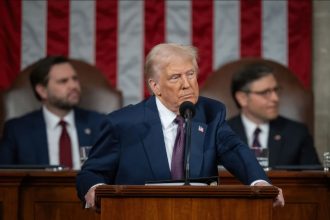
Trump framed the pause as a deliberate decision to suspend U.S. military action because major objectives had already been met and a longer-term agreement might be within reach. He said Washington had received a “10 point proposal” from Iran and believed it could form the basis for negotiations that might finally move the region toward a more durable settlement.
But the path to that outcome remains highly uncertain. Only hours before the ceasefire announcement, Trump had been threatening devastation on a civilizational scale if Iran failed to comply with his deadline. Iran, for its part, had earlier appeared unwilling to discuss a temporary truce and was said to be seeking a full end to the war along with compensation for damage.
That means the ceasefire is best understood as a tactical pause rather than a strategic resolution. Markets were right to respond to the reduced immediate danger, but the broader conflict has not been settled. Oil may have fallen hard, yet the underlying message from Wednesday was less reassuring than the price action suggested: the risk premium is lower, but it has not disappeared.