


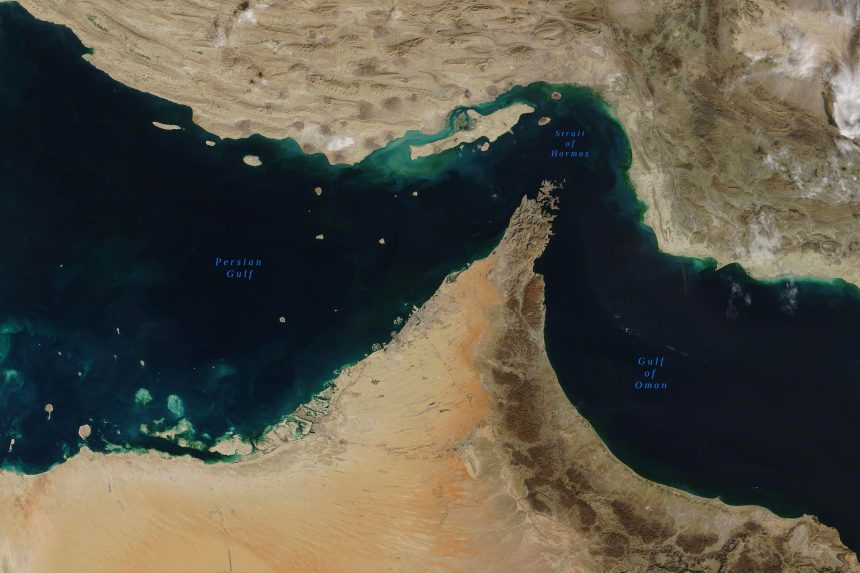

The Hormuz oil supply shock deepened on March 12 after Iran’s new supreme leader, Mojtaba Khamenei, backed keeping the Strait of Hormuz closed. His statement hardened fears that the disruption could last longer than traders had hoped. Oil markets reacted quickly. Brent crude rose about 9% to $100.03 a barrel, while West Texas Intermediate climbed to $95.25.
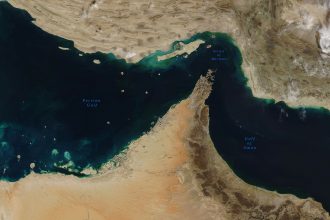
The strait is one of the world’s most important energy chokepoints. Roughly one-fifth of the oil traded globally passes through it. Any extended closure can hit shipping, refinery planning, fuel prices, and inflation expectations across major economies. The latest move matters because it shifts concern from temporary disruption to a more entrenched supply threat.
Markets were already tense before Khamenei’s remarks. Tankers had been attacked in Iraqi waters, Iraqi oil ports halted operations, and Oman moved vessels from a key export terminal as a precaution. Those events reinforced the sense that the risk now extends beyond a single passageway.
Iran’s Message Raises the Stakes
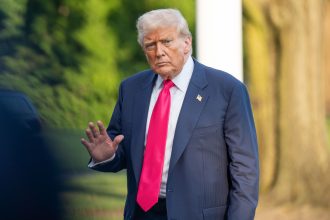
Khamenei’s statement was his first major message since succeeding his father. According to Reuters, he said the Strait of Hormuz closure should remain in place as a pressure tool. That wording was important because it suggested Iran sees the disruption as leverage, not simply a battlefield consequence.
That change in tone affects how traders price risk. A short-lived disruption can be cushioned through rerouting and the release of reserves. A politically reinforced closure is harder to dismiss. It increases the chance that insurers, shippers, and refiners will assume prolonged instability rather than a quick reopening. That alone can keep crude prices elevated.
The conflict has already forced a broad reassessment of worst-case outcomes. One Reuters report said prices briefly exceeded $119 a barrel after the war began on February 28, the highest since mid-2022. That surge reflected both real supply constraints and fear of longer market damage.
Shipping Disruption Spreads Through Energy Markets
The Hormuz oil supply shock is not only about headline oil prices. It also reflects a breakdown in the normal flow of tankers, export schedules, and storage planning. Reuters reported that the conflict has effectively blocked the chokepoint, stranding vessels and forcing some producers to suspend output due to limited storage capacity.
That matters because lost exports can quickly turn into lost production. When storage fills, producers may have to slow or stop pumping. This creates a deeper supply problem than simple shipping delays. It also means even a later reopening may not instantly restore normal flows. Recovery could take weeks.
The International Energy Agency has described the crisis as the largest oil-supply disruption in history. Reuters reported that Gulf producers have cut output by at least 10 million barrels per day. In response, the IEA authorized a record 400 million-barrel release from emergency reserves. Even so, markets remain doubtful that reserve barrels alone can fully offset a prolonged closure.
Banks and Governments Rework Their Assumptions
Wall Street is adjusting its forecasts as the disruption lengthens. Reuters reported that Goldman Sachs raised its fourth-quarter 2026 price forecasts to $71 for Brent and $67 for WTI, up from $66 and $62. The bank now expects about 21 days of severely reduced flows, followed by a 30-day recovery period.
Goldman also warned that if low flows persist through March, daily oil prices could surpass the highs seen in 2008. That is not its base case, but it shows how sharply assumptions have shifted. Markets are no longer debating only whether prices will rise. They are debating how extreme the upside risk has become.
Governments are trying to calm those fears. U.S. Energy Secretary Chris Wright said oil is unlikely to hit $200 a barrel, even under current conditions. Still, he acknowledged the conflict has disrupted traffic through the strait and raised the risk of a wider energy crisis. That mix of reassurance and warning captures the market mood.
Inflation Fears Return to the Forefront
Higher crude prices rarely stay confined to the energy sector. They spread through freight, airline fuel, manufacturing inputs, and household budgets. That is why the Hormuz oil supply shock also matters for central banks and bond markets. A sustained rise in oil can revive inflation just as many policymakers were considering easier settings.
The renewed inflation threat is already feeding into global market volatility. Reuters reported that global shares fell as attacks on oil tankers and Iran’s warning pushed crude above $100, reigniting price concerns. That suggests investors now see the oil shock as a macro event, not just an energy story.
For now, the key variable is duration. If escorts resume and flows recover, prices may retreat. If the closure continues and attacks widen, the supply shock could become the dominant global market story of the spring. Khamenei’s remarks made that second outcome harder to ignore.