



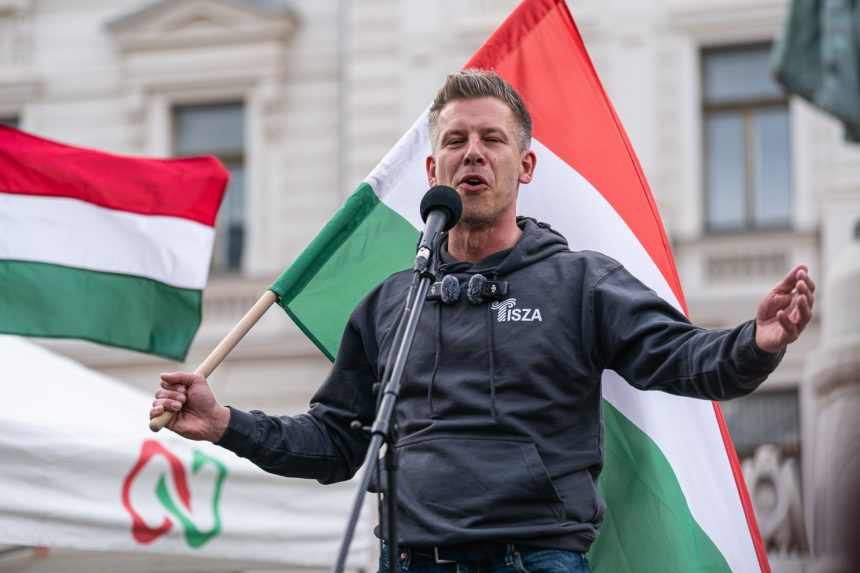

The Peter Magyar Hungary agenda came into sharper focus a day after his election victory, as the Tisza Party leader laid out plans for constitutional change, institutional reform, and closer alignment with Europe. At his first post-election news conference in Budapest, Magyar said voters had confirmed that Hungary belongs in Europe after 16 years of nationalist rule. He presented the result as a mandate for democratic repair rather than a routine transfer of power.
Magyar’s landslide win ended Prime Minister Viktor Orbán’s long hold on power and gave Tisza the numbers to pursue sweeping changes. He said the new parliament should convene as soon as possible and urged President Tamás Sulyok not to delay the inaugural session. That message suggested Magyar wants an accelerated handover and a quick start to structural reforms.
For markets and Brussels, the immediate question is whether Magyar can turn campaign promises into a credible governing program. His first outline emphasized restoring democratic standards, rebuilding investor confidence, and unfreezing relations with the European Union. Those goals are closely linked because Hungary’s access to frozen EU money depends on reforms to governance and the rule of law.
Constitutional Change Tops the Early Priorities
A central element of the Peter Magyar Hungary agenda is constitutional change. Magyar said his government would amend the fundamental law and write in a strict limit of two terms for any future prime minister. That move would directly address concerns about the concentration of power under Orbán’s long rule. It would also give symbolic force to Magyar’s claim that Hungary is entering a new political era.
He also said Hungary should begin accession to the European Public Prosecutor’s Office, a step long resisted by Orbán’s government. That would be a major anti-corruption signal to Brussels and to investors. It would also align Hungary more closely with mainstream EU accountability standards.
Magyar described these changes as practical, not retaliatory. He said his government would restore democratic standards without using anti-democratic methods. That line appeared designed to reassure both domestic critics and EU officials that institutional repair would stay within legal bounds, despite Tisza’s large parliamentary mandate.
Rule of Law and EU Ties Take Center Stage
Magyar repeatedly linked his victory to Hungary’s European identity. He said the election result, coming 23 years after Hungary’s EU membership referendum, confirmed the country’s place in Europe. He also said he wants a strong Central Europe within a strong European Union. That framing marks a clear break from Orbán’s years of confrontation with Brussels.
The practical importance is considerable. Hungary has more than €6 billion in EU recovery funding tied up over concerns about governance, corruption, and judicial independence. Restoring those funds is central to any economic reset. Analysts have already described Magyar’s win as a possible turning point for relations with Brussels, though they also warn that the EU will want concrete reforms before releasing money.
Magyar said his government would work to restore plural democracy, checks and balances, and judicial independence. He added that investigative bodies should receive the resources needed to do their jobs. Those commitments are likely to be read as a direct response to years of criticism from EU institutions and rights groups.
He Signals Stability on Finance and Institutions
Magyar also used the news conference to calm concerns about economic management. He said Hungary is in a difficult financial and economic situation, but argued that cooperation with the National Bank will be important as long as the central bank acts within its legal mandate. He praised Governor Mihály Varga for doing his job in line with the law and said Hungary does not need more chaos that could damage investor confidence.
That tone was notable for suggesting continuity and restraint in one key area. Rather than threatening the central bank, Magyar emphasized institutional independence and orderly coordination. After a politically dramatic election, that message may help limit fears of abrupt financial disruption. Markets had already responded positively to the election result, with gains in Hungarian assets reported after Tisza’s victory.
At the same time, Magyar took a harder line on the presidency. He said Hungary does not need the current president and called on Sulyok to leave, arguing that he merely signed whatever was put before him. That sharper tone suggested Magyar may move quickly against figures associated with the old governing structure, even as he promises legal continuity elsewhere.
Social Rights and the Post-Orbán Tone
Magyar also addressed civil liberties, including assembly and LGBTQ+ rights. He said everyone has the right to assemble in Hungary. He added that people should be free to live with and love whomever they want, so long as they do not break the law or harm others. That language was measured, but it stood in contrast to Orbán-era politics, which often treated LGBTQ+ rights as a culture-war issue.
The broader message from the news conference was one of controlled change. Magyar is trying to present himself as both a reformer and a stabilizer. He wants to dismantle what he sees as democratic damage from the Orbán years, but without frightening investors, institutions, or European partners. That balancing act will define the early test of the Peter Magyar Hungary agenda.