


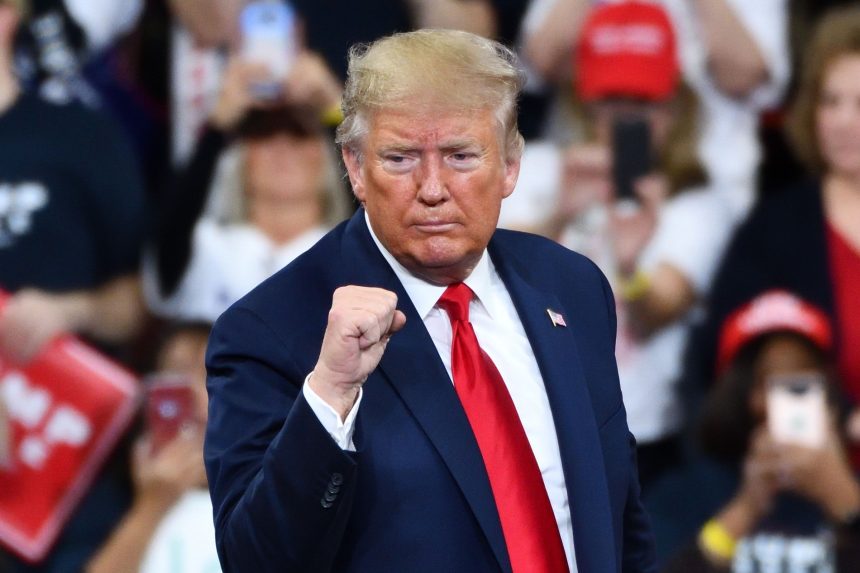
The Pope Leo-Trump policy clash is widening as the new pontiff increasingly challenges key parts of President Donald Trump’s foreign and domestic agenda. Though he has avoided naming Trump directly in many remarks, Pope Leo XIV has condemned the U.S.-Israeli war in Iran, supported criticism of mass deportations, and warned about worsening U.S.-Europe relations. Those interventions have made the Vatican a more visible moral counterweight to Washington.
The tension is notable because Leo is the first U.S.-born pope. That background gives his criticism unusual political weight in the United States. It also makes his split with Trump more symbolically charged than a typical Vatican disagreement. Vatican officials have also confirmed that, despite an invitation from Trump, Leo will not visit the United States this year.
His recent comments show a pattern rather than a single dispute. Leo has spoken against the normalization of war, urged humane treatment of migrants, and questioned peace efforts that sideline Europe. Taken together, those positions mark out a broader challenge to the administration’s worldview.
War in Iran Became the Sharpest Point of Conflict
The most direct rupture has come over the war in Iran. Leo has been especially critical of the U.S.-Israeli offensive that began on February 28. In public remarks during Holy Week, he condemned efforts to use religion to justify violence and said God does not listen to the prayers of leaders with “hands full of blood.” He also called the conflict “atrocious.”
During Palm Sunday Mass, Leo said Jesus is the “King of Peace” and cannot be used to justify war. He expressed concern for Christians in the Middle East and appealed for reconciliation. Those remarks were widely read as a rebuke to political and military leaders who have wrapped the Iran campaign in religious language.
The pope’s criticism fits a wider message he has delivered since early this year. In January, he warned that war was becoming fashionable again in global politics. That warning now appears central to his public stance as the conflict with Iran has deepened and widened its humanitarian consequences.
Immigration Has Become a Second Front
The Pope Leo-Trump policy clash is not limited to foreign policy. Leo has also aligned himself with U.S. Catholic bishops who condemned Trump’s immigration crackdown and mass deportation strategy. He has urged humane treatment of migrants and signaled that the American church should speak clearly on the issue.
That stance reflects both policy and biography. Leo’s international family roots and years of service in Peru are often cited as reasons he sees migration as a human reality rather than only a border issue. His interventions have placed him closer to bishops and migrant advocates than to the White House’s enforcement-first approach.
He has made similar arguments before. In late 2025, he called for deep reflection on how migrants were being treated in the United States. Later, he publicly backed American bishops who said the administration’s immigration crackdown violated basic human dignity.
Europe and Ukraine Add Another Layer
Leo has also shown concern about the administration’s handling of Europe and the war in Ukraine. He has warned that no credible settlement can ignore Europe’s role. In earlier remarks, he said any peace effort that sidelines the continent is unrealistic. That position puts him at odds with proposals seen as reshaping transatlantic relations on Washington’s terms.
This matters because the Vatican traditionally tries to preserve diplomatic space with all sides. Leo appears to be keeping that habit, but with a sharper edge. Rather than endorsing a U.S.-led geopolitical framework, he is stressing inclusion, dialogue, and the moral cost of exclusionary power politics.
His recent visit to Monaco reinforced the same themes. There, he urged rejection of the “idolatry of power and money” that fuels conflicts. While not directed solely at Washington, the message echoed his broader criticism of militarized, transactional politics.
Vatican Influence May Grow During Holy Week
The immediate political effect of Leo’s criticism may be limited. The White House is unlikely to change policy solely because of Vatican pressure. But the pope’s words carry moral authority across global Catholic networks and among many U.S. voters. That can shape public debate, especially on war and migration.
The timing also matters. Holy Week attracts the pope’s largest annual audience. His remarks are coming at a time of war, election-season polarization, and rising strain between America and some allies. That gives the Pope Leo-Trump policy clash a reach beyond church politics. It is becoming part of a wider argument over American power, identity, and moral limits.