





The Supreme Court Trump tariffs ruling delivered a major legal setback to President Donald Trump’s trade strategy on February 20, 2026. The court ruled 6-3 that the International Emergency Economic Powers Act did not authorize his broad tariffs. Chief Justice John Roberts wrote the majority opinion.
The decision struck down tariffs imposed under a law designed for national emergencies, not general tariff policy. The opinion said presidential tariff power requires clear congressional authorization. Roberts wrote that this standard was not met.
The ruling affects a central part of Trump’s second-term economic agenda. Tariffs had become a core policy tool in trade and foreign policy disputes. Markets reacted quickly, with U.S. stocks rising and the dollar weakening. Treasury yields also moved higher.
Court Limits Emergency Tariff Authority
The justices upheld a lower court outcome and rejected Trump’s use of IEEPA for sweeping import duties. The court said the statute’s language on regulating imports does not include tariff authority. Roberts also stressed that Congress, not the president, controls taxing and tariff powers under the Constitution.
The majority included Roberts, Neil Gorsuch, Amy Coney Barrett, and the court’s three liberal justices.The liberal justices did not join the section invoking the “major questions” doctrine. That doctrine requires clear congressional approval for actions with major economic significance.
A three-justice dissent argued the decision may not block similar tariffs under other statutes. Justice Brett Kavanaugh, joined by Clarence Thomas and Samuel Alito, wrote that other legal paths remain available. Administration officials also signaled they may pursue alternative authorities.
The IEEPA has been historically used for sanctions and asset freezes. The law does not specifically mention tariffs. Trump’s Justice Department had argued that tariff authority was implied through the power to regulate imports. The court rejected that reading.
Which Tariffs Were Hit by the Decision
The Supreme Court Trump tariffs ruling upends the broadest tariffs imposed under IEEPA. It affects several major tariff groups that were central to Trump’s recent trade actions. Those included “Liberation Day” tariffs and country-specific measures tied to other policy disputes.
AP said the “Liberation Day” tariffs imposed a baseline tax and higher country rates on many trading partners. Major affected partners included the European Union, Japan, and South Korea. Those tariffs were justified by Trump as a response to trade imbalances.
AP also said the ruling hits “trafficking tariffs” imposed on Canada, Mexico, and China. Trump tied those tariffs to immigration and fentanyl-related emergency claims. Rates changed over time through delays, retaliation, and trade talks.
Additional, IEEPA-based tariffs on Brazil and India are also affected, according to AP. AP said Brazil tariffs were linked to the prosecution of Jair Bolsonaro. It said India’s tariffs were tied to purchases of Russian oil.
Not all tariffs disappear after the ruling. AP reported that many sector tariffs remain under Section 232 of the 1962 Trade Expansion Act. Those include tariffs on steel, aluminum, vehicles, copper, and lumber.
Refund Exposure and Treasury Questions
The Supreme Court’s Trump tariffs ruling also raised a major fiscal question for Washington. According to a Reuters report, more than $175 billion in tariff collections may be subject to refunds. That estimate came from economists at the Penn-Wharton Budget Model.
The court did not directly address refunds in its decision. Still, economists stated the ruling clearly opens the door to refund claims. The case now returns to the Court of International Trade for the next steps.
Penn-Wharton’s estimate was built from product-level tariff data across countries and tariff codes. Moreover, this model estimated roughly $500 million in IEEPA tariff revenue per day. It estimated total IEEPA receipts at about $179 billion since February 2025.
Sources noted that the refund total would exceed the combined fiscal 2025 spending of the Transportation and Justice departments. That comparison highlights the scale of the possible Treasury impact. Businesses are expected to move quickly to file claims.
Market Response and Trade Policy Outlook
Financial markets treated the ruling as a near-term relief signal for trade uncertainty. Stock indexes rose after the decision. Another report said investors also weighed possible deficit and bond-market implications.
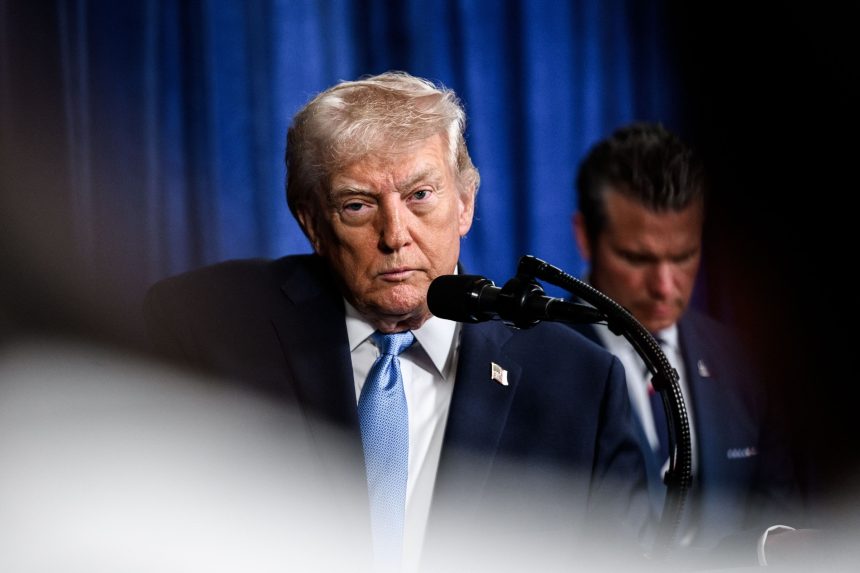
Trump responded angrily after receiving news of the ruling. He called the decision a “disgrace” during a White House event, according to sources. Later, a separate report said Trump called the ruling “deeply disappointing.”
The administration now faces a legal and operational scramble. Customs officials have not clarified when collections would stop or how refunds would be processed. This uncertainty could persist for months as agencies and courts sort out procedures.
For financial news readers, the key issue is not only trade policy. The Supreme Court Trump tariffs ruling also shifts revenue assumptions, corporate planning, and inflation-sensitive import pricing. Those effects will depend on replacement tariffs and refund mechanics.