



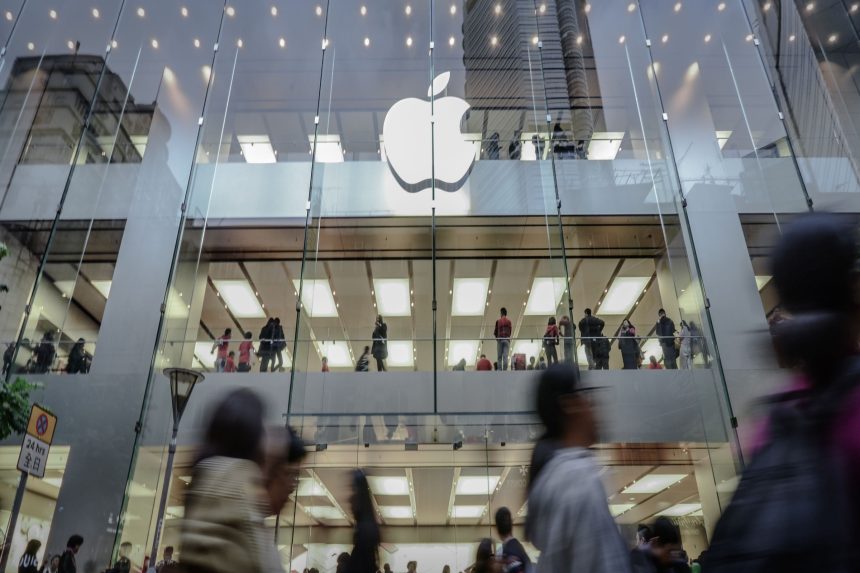

Apple at 50 is more than an anniversary story. It is also a record of how one company repeatedly turned specialized technology into mass-market products. Apple was founded on April 1, 1976, and its official anniversary messaging says its products have changed how people connect, create, learn, and work. That broad claim is supported by several major shifts in computing, media, and communications over five decades.
The company’s influence is especially relevant to investors because Apple’s product decisions often create new markets rather than compete only in old ones. Its biggest successes came when it simplified complex technology and combined software, hardware, and services into a single experience. That model helped turn Apple into one of the world’s most valuable companies. Apple reported US$391.0 billion in net sales for fiscal 2025.
The Early Leaps Made Personal Computing Mainstream
The first major leap came with the early personal computer. Apple’s anniversary materials point back to the first Apple computer and the Mac as foundational moments in its history. The company’s early machines helped move computing away from hobbyists and corporate labs toward households, schools, and small businesses.
A second leap came with the Macintosh in 1984. The Mac popularized a graphical user interface, the mouse, and a more approachable style of computing. Those features already existed in research settings, but Apple helped package them for mainstream use. The result was a durable shift in how ordinary users expected computers to work.
Later, the iMac helped revive Apple and reframe the home computer as an internet-ready consumer device. Coverage marking Apple’s 50th anniversary highlighted the iMac’s role in the company’s late-1990s turnaround. Its design and simplicity made the computer itself part of the product appeal. That helped restore Apple’s relevance after a period of decline.
Music and Phones Became Apple’s Biggest Consumer Bet
Another defining leap came with the iPod in 2001. Apple’s anniversary page lists the iPod among the products that changed the company and its users. The device did not invent digital music, but it made portable music libraries simpler and more attractive for mainstream consumers. That move also helped Apple build a larger ecosystem around devices and media.
The most important commercial leap came with the iPhone in 2007. It combined phone, internet, camera, and computing functions into one product category that quickly became central to modern life. Apple’s own 50th anniversary materials place the iPhone alongside the company’s most important transformations. Recent anniversary coverage also noted that the iPhone remains Apple’s main revenue engine.
The App Store, launched in 2008, became another major turning point. It expanded the iPhone from a product into a platform. That shift created a software marketplace that enabled external developers to add value while strengthening customer lock-in. Britannica noted that Apple helped reshape the industry by building a marketplace ecosystem for third-party apps.
Wearables, Chips, and Services Extended the Model
Apple’s next major leap was not a single device, but an ecosystem strategy. Its anniversary page groups the iPad, Apple Watch, AirPods, and core services such as Apple Music, Apple Pay, iCloud, and Apple TV into a single broader story. The company used those products to deepen customer retention and increase recurring revenue. That mattered financially because it reduced dependence on one upgrade cycle.
The Apple Watch also showed Apple could build a meaningful product beyond phones and computers. It pushed the company further into health, fitness, and wearable computing. AirPods did something similar in audio, turning wireless earbuds into a mainstream accessory category. Together, those products reinforced Apple’s ability to define behavior rather than just sell hardware.
Another important leap came with Apple Silicon. The company’s move to its own chips gave it tighter control over performance, power efficiency, and product integration. That decision reflected the same long-running strategy behind many earlier hits: own more of the stack, then use that control to improve the user experience.
The Next Challenge Looks Different
Apple at 50 arrives at a moment when the company’s past strengths are clear, but its next leap is less obvious. Recent anniversary coverage said Apple still faces pressure to prove it can lead in artificial intelligence as convincingly as it once led in personal computing and smartphones. The company has celebrated its history, but markets are focused on what comes next.
That is why Apple’s history still matters financially. Its biggest breakthroughs were rarely first in pure invention. They were first in making powerful technology feel usable, desirable, and reliable at scale. At 50, the central question is whether Apple can repeat that pattern in the AI era as effectively as it did with the Mac, iPod, iPhone, and its wider ecosystem.