





China’s tech race roadmap is expected to take shape this week as lawmakers open the annual National People’s Congress. The leadership will release an annual government work report and budget plans on Thursday, March 5, 2026. Officials are also expected to outline the 15th Five-Year Plan for 2026–2030, a key industrial blueprint.
The documents are closely watched by markets because they signal favored sectors and future state support. Priorities can shape funding flows, regulatory posture, and procurement direction across strategic industries. The new plan arrives amid intensifying competition with the West over technology and supply chains.
Beijing Prepares New Priorities And Funding Signals
The government’s work report and budget often indicate where policy support will be concentrated. The five-year plan typically sets targets and tools for industrial expansion. Investors track these signals for clues on subsidies, financing channels, and state-backed adoption.
Last year, officials first referenced AI models in the work report. They also highlighted “embodied intelligence,” a term linked to humanoid robots and physical automation. Those inclusions suggested a broader push beyond software into real-world deployment.
This year’s meeting also lands before a planned summit between Xi Jinping and Donald Trump. The meeting is expected to take place from March 31 to April 2, according to the report. Technology controls and supply chains are likely agenda items.
Policy timing matters because export controls have tightened access to advanced chips and equipment. China’s strategy increasingly stresses scaling domestic capability and reducing external bottlenecks. The coming documents will show how aggressively Beijing plans to “industrialize” recent breakthroughs.
AI After The Shock And The Push Into Factories
The report described the past year as a period of sudden progress for Chinese AI developers. That progress drew global attention despite U.S. restrictions on advanced chips. It also challenged assumptions about how quickly China could close capability gaps.
The Chinese startup DeepSeek was cited as a key catalyst in those shifting perceptions. The report said its viral model release last year helped trigger a global tech share selloff. It also reshaped the debate on China’s competitiveness against the United States.
Alfredo Montufar-Helu of Ankura Consulting said, “The shock is over.” He said expectations are now focused on what China can produce next. The pressure is on policymakers to turn standout releases into systematic gains. Shujing He of advisory firm Plenum China said officials may push “AI-plus manufacturing.” She said large state-owned enterprises could act as anchor adopters. That approach could pull startups and specialized suppliers into real deployment.
Industry voices also warned of uneven benefits. Shin Nakamura of Daiwa Steel Tube Industries said large producers can better absorb deployment costs. He said the gap between big firms and SMEs may widen. He also predicted faster consolidation.
Humanoids, Space, And Commercial Scaling Challenges
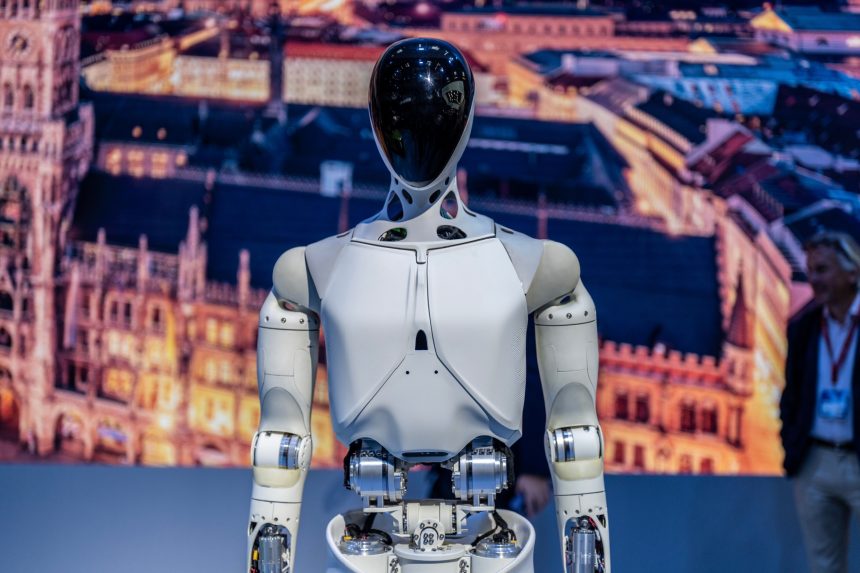
The China tech race roadmap is also expected to double down on embodied intelligence. China recently showcased humanoid robots performing dance and martial arts on a major national TV broadcast. The display was framed as evidence of rapid progress in robotics.
Mike Nielsen of computer vision firm RealSense pointed to major improvements in balance and motor control. He said dynamic locomotion advanced dramatically over the past year. He cited strong momentum and higher agility among early-stage platforms.
Regulators, however, have warned about low differentiation among domestic developers. The report cited more than 150 humanoid robot developers in China. Analysts expect consolidation, potentially faster than in earlier strategic sectors like EVs.
Space is another test case for turning research into industrial strength. Private launch firm LandSpace said it plans another recovery attempt this year. The effort involves its reusable Zhuque-3 rocket, after a major test in December.
Economic constraints remain central. The report cited a January Rhodium Group assessment. It said emerging industries may not deliver enough investment to sustain 5% GDP growth. It suggested continued reliance on exports.
Plenum’s He said China may prioritize sectors with nearer commercial impact, including autonomous driving. That implies a pragmatic tilt toward technologies that can scale revenue sooner. The plan’s details could influence capital allocation across hardware and software priorities.
Supply Chains And Export Controls As Strategic Leverage
Supply chains are expected to be a major theme of the new five-year blueprint. The report said analysts will watch how Beijing plans to protect industrial foundations beneath its technology push. Supply chains have become instruments of geopolitical pressure.
Over the past year, China expanded its export controls to include rare earths and low-end semiconductors. The report said those moves disrupted global supply chains and highlighted Beijing’s leverage. Such controls can affect pricing power and procurement risk across industries.
Moreover, Doug Friedman of the U.S. Biomanufacturing Institute BioMADE said dependencies extend beyond minerals. He said similar dynamics appear in industrial chemicals. He also said the U.S. and China are “neck and neck.”
Friedman said the next three to five years may decide who gains a lasting lead. That time horizon aligns with the coming 2026–2030 plan period. For markets, the key question is execution, not slogans. The roadmap will be judged by adoption and scale.