


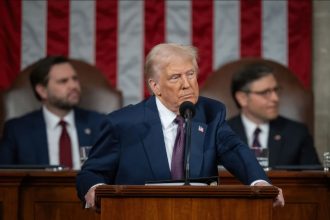
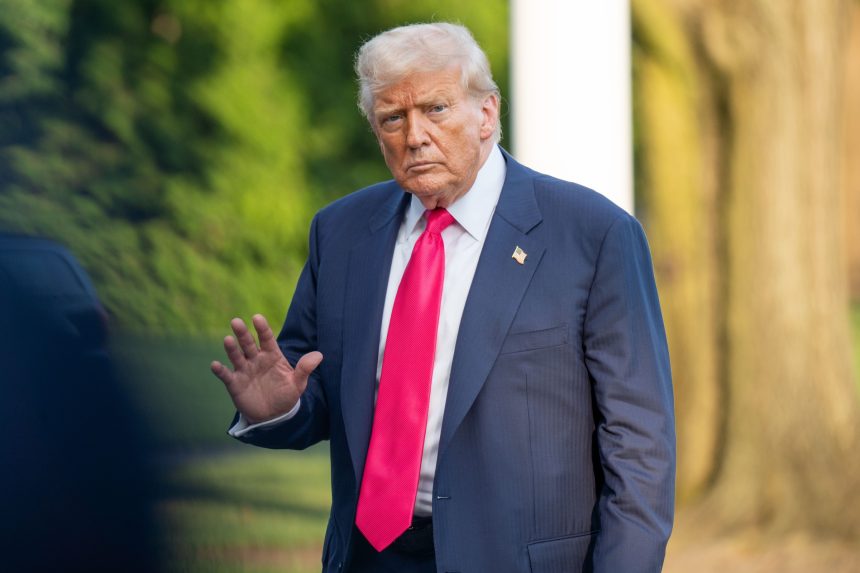

President Donald Trump used his State of the Union address to defend his foreign policy approach after months of rising public skepticism. The speech leaned heavily on domestic themes, yet the president highlighted several foreign-policy claims as core achievements. He framed them as proof that “America First” can pair restraint with targeted force. He also argued that U.S. leverage is improving through military pressure, diplomacy, and tougher demands on allies.
Trump presented his record as a series of wins with economic and security spillovers. He cited progress in the Middle East, tougher bargaining inside NATO, and a major operation in Venezuela. He also returned to the possibility of new action against Iran while talks continue. The themes matter for markets because they affect energy flows, defense spending, sanctions risk, and trade conditions.
A recent national survey found broad disapproval of Trump’s handling of foreign policy and concern about military intervention. In the same poll, a majority said he has gone too far in using the U.S. military abroad. That backdrop made the address a test of whether the White House can reassure voters and investors.
Middle East Claims and a Renewed Iran Warning
Trump said his administration helped broker a fragile ceasefire arrangement in Gaza and aided efforts to bring home hostages taken by Hamas. He placed the Middle East track among his biggest foreign-policy outcomes. He also described U.S. power as essential to maintaining deals.
Iran was the sharpest escalation risk in the speech. Trump said he is weighing further military action while building U.S. forces in the region. He argued that prior strikes did not end Iran’s ambitions, despite earlier claims of decisive damage. He framed the current moment as a repeat of a familiar nuclear standoff.
In the address, Trump said Iran is again pursuing “sinister ambitions” and demanded explicit commitments against nuclear weapons. He said negotiations are underway, but he has not heard the words he wants. He tied the stakes to U.S. security and deterrence. His remarks suggested pressure will remain high during talks.
Iranian Foreign Minister Abbas Araghchi publicly rejected any plan to build a nuclear weapon. He wrote that Iran would not develop one “under any circumstances.” U.S. envoys Steve Witkoff and Jared Kushner are scheduled to meet Iranian officials again in Geneva. The talks appear focused on the nuclear issue, not broader regional disputes.
Ukraine War, NATO Pressure, and Voter Unease
Trump offered limited detail on the war in Ukraine, despite the date aligning with the invasion anniversary. He repeated his view that the conflict’s monthly toll is severe. He said “25,000 soldiers” are dying each month and reiterated that he is seeking an end. He had promised faster results during the campaign.
Negotiations continue under U.S.-mediated talks, according to the reporting. The sides remain divided over territory and the Zaporizhzhia nuclear power plant. Volodymyr Zelenskyy has said the White House wants the war to end by June and could pressure both parties. Those timelines can affect defense procurement expectations and European fiscal planning.
Trump also cited efforts to push NATO partners to raise defense spending. He described burden-sharing as a major win and a key “America First” goal. That message aligns with higher European defense budgets and long-term contract visibility for suppliers. It also shapes alliance politics as Washington asks for larger commitments.
Still, the political risk remains visible at home. The survey cited in the report showed broad dissatisfaction with Trump’s foreign policy. A separate finding said many Americans view U.S. military involvement as excessive. That tension can influence Congress, appropriations, and the durability of foreign commitments.
Venezuela Operation and Western Hemisphere Strategy
Trump again celebrated the capture of Venezuelan leader Nicolás Maduro in a military operation described as audacious. He called the outcome a major security victory and honored a helicopter pilot wounded during the mission. He said he awarded the pilot the Congressional Medal of Honor. He also recognized Enrique Márquez, a former political prisoner who was later freed.
Trump connected the operation to energy supply and leverage. He said the United States received more than 80 million barrels of oil from what he called a new partner. The administration previously discussed selling 30 to 50 million barrels of stranded Venezuelan oil. Energy traders watch such claims because they shape expectations for access to supply and sanctions enforcement.
He described a broader Western Hemisphere posture aimed at drug trafficking and illegal migration. He likened the strategy to the Monroe Doctrine and used the label “Donroe Doctrine.” The approach includes military strikes on alleged drug-running vessels in the Caribbean, plus seizures of sanctioned oil tankers. It also includes tighter pressure on Cuba, according to the report.
Trump presented the strategy as restoring regional dominance and limiting foreign interference. Support varies across countries, with some backing tougher enforcement and others warning of escalation. For businesses, this posture can influence shipping risk, insurance costs, and sanctions compliance. It can also affect oil logistics and regional investment decisions.
Trade Leverage After the Tariff Court Setback
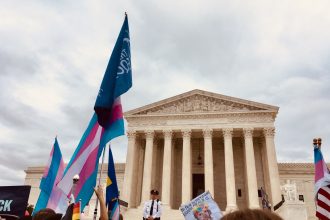
Trump also addressed tariffs in the context of a recent Supreme Court setback. He criticized the ruling that struck down his use of a 1977 legal authority for many tariff hikes. In the speech, he called the outcome “an unfortunate ruling” and suggested he would continue seeking leverage. He warned against countries “playing games” with the decision.
That link between trade and foreign policy underscored the administration’s broader framework. The Trump foreign policy approach relies on pressure tools across domains, including military posture, sanctions, and tariffs. Investors will track how those tools interact with legal limits and diplomatic timelines. The next markers include the Geneva talks and further moves on alliance burden-sharing.