




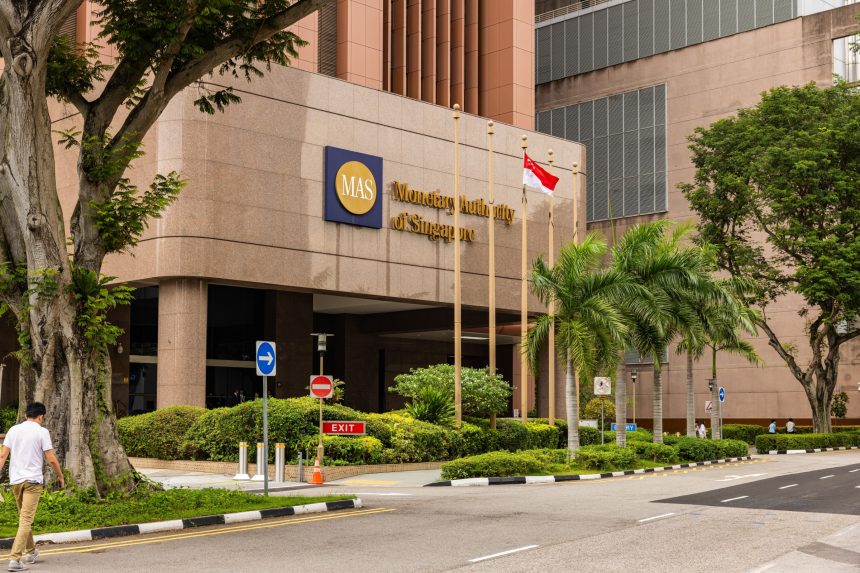

Singapore’s rising energy prices have pushed the country’s central bank into its first monetary tightening in four years. On Tuesday, the Monetary Authority of Singapore raised its policy stance and lifted its inflation forecast. Officials said the city-state is vulnerable to higher oil and gas costs after six weeks of war in the Middle East. They also warned that supply-chain disruption could last beyond the immediate conflict.
The move highlights how exposed Singapore is to imported inflation. The country depends heavily on trade and imported fuel. It is also highly sensitive to disruptions linked to the effective closure of the Strait of Hormuz, a crucial route for global seaborne energy shipments. When fuel costs rise sharply, the impact reaches transport, production, and consumer prices quickly.
At the same time, the economy is already losing momentum. New government estimates released on Tuesday showed a quarterly contraction in output. Manufacturing also weakened sharply. That combination has made policymaking more difficult, because officials now have to respond to higher prices while growth is already softening.
Singapore Uses the Currency as Its Main Tool
Singapore’s policy system differs from that of most major central banks. Instead of using domestic interest rates as its main lever, the Monetary Authority of Singapore manages the exchange rate. It does this by guiding the Singapore dollar within a policy band against the currencies of key trading partners. The goal is to influence imported inflation and maintain medium-term price stability.
By tightening policy, the authority is allowing the Singapore dollar to appreciate more quickly. A stronger currency can reduce the local effect of higher global import costs. For an economy that imports much of what it consumes, that matters a great deal. It is one of the most direct ways Singapore can respond when inflation pressure comes from abroad.
The decision is notable because it reverses the direction of policy seen last year. In 2025, the authority slowed the pace of appreciation twice in an effort to support growth. That response was meant to offset weaker global demand and the broader effects of Donald Trump’s tariff policies. Now the pressure from rising fuel costs has overtaken that earlier concern.
The central bank does not publish the exact levels of its exchange-rate band. Still, markets read changes in the slope and stance closely. Tuesday’s move signals that inflation risk has become more urgent than the need for short-term growth support.
Inflation Outlook Has Shifted Higher
The central bank also revised its inflation forecast upward. It lifted its expected range from 1% to 2% to 1.5% to 2.5%. That adjustment reflects the expectation that higher oil and gas prices may persist for some time. Officials said that even if Middle East supplies are restored, the return to normal delivery patterns will likely be slow.
They also warned that governments rebuilding depleted energy reserves could add further demand. That would keep pressure on global prices even after immediate supply routes recover. In other words, the issue is not only the interruption itself. It is also the aftereffects that follow once countries start restocking.
For Singapore, those concerns are especially serious because inflation is imported so easily through trade channels. Higher fuel costs can feed into electricity, logistics, food distribution, and industrial inputs. That makes it harder to isolate price pressure in one part of the economy. It also raises the risk that inflation remains elevated longer than expected.
The policy move therefore reflects a preventative calculation. Officials appear to be acting before those higher costs become more deeply embedded. A firmer currency may not remove the source of the problem, but it can help reduce how strongly it feeds through the domestic economy.
Growth Weakens as Manufacturing Slips
The growth picture is moving in the opposite direction. Advance estimates from the Ministry for Trade and Industry showed that GDP fell 0.3% in the first quarter from the previous three months. That contraction points to weaker momentum at the start of the year. It also suggests that the economy entered this period of rising fuel costs without much room to absorb another external hit.
Manufacturing was particularly weak. The sector dropped 4.9% in the first quarter, compared with a 4.5% increase in the final quarter of 2025. That is a sharp reversal for a part of the economy closely tied to regional demand and global trade conditions. When manufacturing weakens in Singapore, it often signals wider pressure across exports and business investment.
Officials acknowledged the tension in clear terms. They said there are considerable risks to both inflation and growth. A longer disruption to fuel supplies, they warned, would raise global price pressures while also dragging more heavily on economic activity. That is the kind of combination central banks dislike most, because it narrows the space for easy policy choices.
Singapore’s latest move shows how quickly that pressure is building in Asia. The city-state is trying to shield itself through a stronger currency rather than through interest rates. Whether that works will depend on how long oil and gas prices stay high, how badly trade routes are disrupted, and how much further growth weakens in the months ahead.